
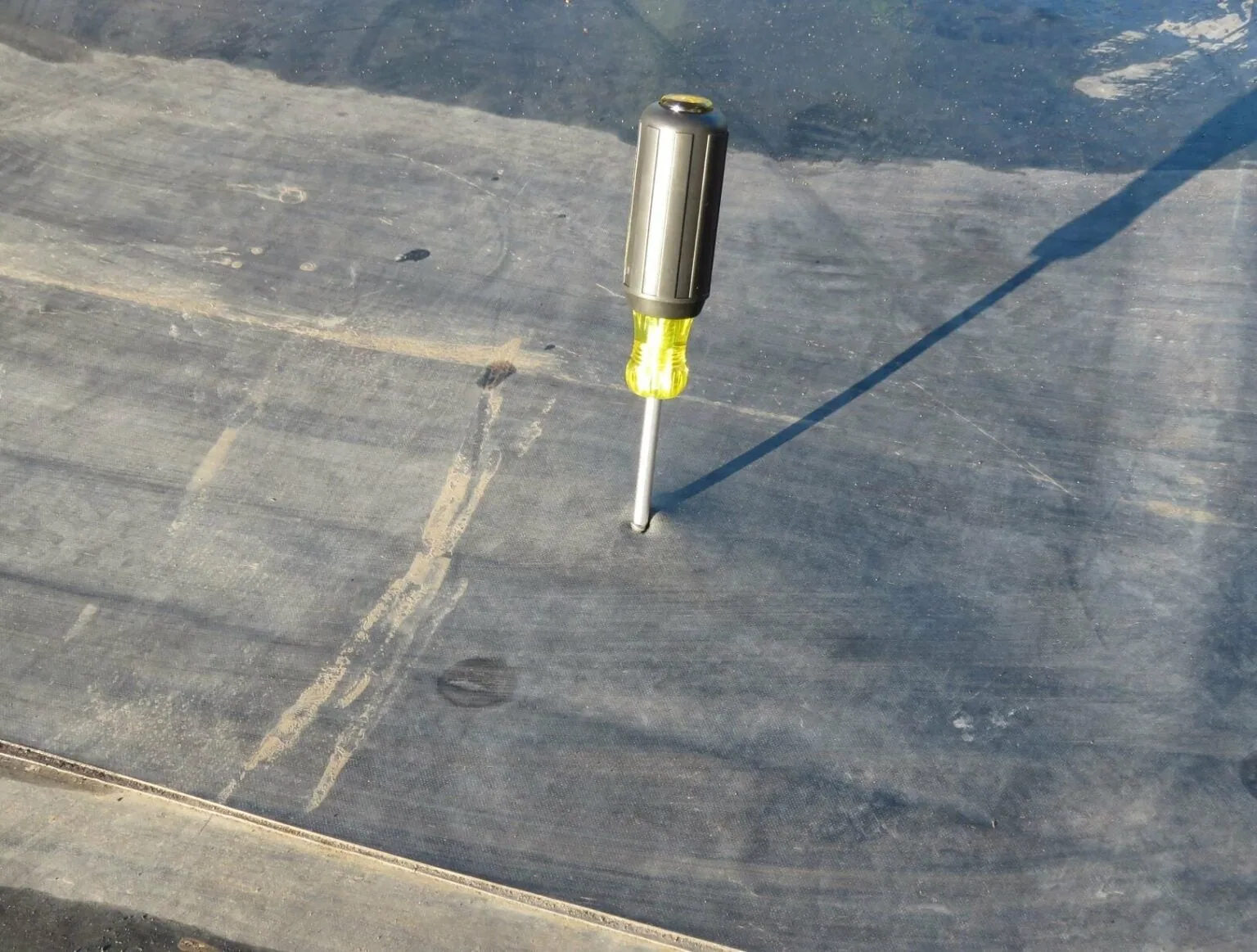
Commercial Roof Membrane Puncture Repair
Find the puncture and restore a usable roof zone
A puncture may be small at the surface and still let water reach insulation, deck or the room below. In Lakewood, CO, we locate the opening, inspect the surrounding membrane and record the path from reported interior evidence before selecting a patch. The survey notes roof system, surface condition, nearby seams and service routes. It also identifies who or what uses the area, since repeated foot traffic can damage a repair if the route stays unchanged.
Lakewood’s commercial centers include office, retail, medical and light-industrial properties. Denver West Business Park sits beside major retail and includes office suites, flexible space and a conference center. That mix can put equipment access and service visits on the same roof, but the route at each building must be verified with its facilities contact.
How do we find the opening and the water path?
We check the suspected location for cuts, punctures, dropped fasteners, tool marks, worn walkway edges, open laps and damage at curbs or penetrations. The inspection maps the defect and compares it with the rooms or equipment below. Because water can move under the membrane, the interior drip point is a clue rather than a direct measurement of the opening. Photos identify the roof zone and nearby reference points for a future check.
If the membrane is covered by ballast, pavers, walkway pads or equipment, we identify what needs to move and who can authorize that work. The equipment vendor approves any unit movement, and the roofing scope names the material removal boundary before work begins. Where moisture may extend beyond the hole, an infrared scan or test opening can be proposed to determine whether insulation is affected. The report distinguishes what is visible from what remains behind the membrane.
A roof inspection can document adjacent seams and details. A seam condition check can determine whether an apparent puncture is part of a larger joint separation.
What makes a patch compatible with the roof?
We identify the membrane before choosing repair material. A thermoplastic patch may require compatible sheet and a welded connection; an EPDM repair uses its own preparation and seam products. The patch must extend onto sound material with clean, dry contact surfaces. The written scope names the system, preparation, patch size and field check used to confirm the bond or weld.
A surface cover over wet insulation, loose material or a brittle membrane may not restore the assembly. We remove material within the approved boundary, inspect what is exposed and photograph hidden conditions before covering them. If substrate damage or moisture broadens the work, the crew stops and submits a change for review. The owner can approve repair of the revealed area or request a separate survey if the condition may continue elsewhere.
Where a service path caused damage, the scope can include a compatible walkway or a route change approved by facilities. Equipment vendors retain responsibility for moving or adjusting their units. A TPO roof system review can explain heat-welded sheet characteristics, while an EPDM repair discussion covers a separate membrane type.
Which rooftop activities should be included in the repair plan?
Maintenance staff, HVAC vendors, electricians and roof technicians may use the same access hatch, walkway or equipment aisle. We ask the property contact where recurring service occurs, whether a permit or escort is required and what equipment must remain in operation. The material drop and crew route are planned so tools do not cross an active service line. At shift end, the repaired zone is checked and the report identifies whether another trade must review the area.
Along West Colfax, commercial properties and transit connections meet near Wadsworth and Oak; we verify each building’s gate, lift position and tenant route before repair. We confirm the site entrance and delivery window for the actual address. Colorado Mills and Denver West Village provide another local example of a commercial cluster with retail and office uses nearby. The roof map remains property-specific. A West Colfax commercial roof still needs its own access route and repair boundary.
How do Lakewood weather conditions affect a patch?
Hailstorms and both heat and cold extremes are near-term Lakewood hazards, so a puncture inspection may need a weather-aware access and repair window. Hail can create a new opening or leave impact marks that need a closer look; the report distinguishes damage from surface appearance. A very hot membrane can affect safe access and material handling. Cold may limit adhesive use or cure, so a patch is not installed until surface and air conditions fit the product instructions.
Snow and ice can cover a puncture or make the approach unsafe. We record the area as not reached when the roof cannot be inspected properly, then set the condition needed for a return visit. A weather log notes any temporary protection left in place and the date of the permanent repair. If water enters before conditions allow a lasting patch, emergency stabilization is recorded separately. A hail damage review can document a broader storm survey.
What should the owner retain after puncture repair?
The service record lists the opening location, membrane system, patch dimensions, preparation, materials, photographs and any moisture test. It states whether the surrounding area was inspected and what remained outside the authorized boundary. If an added walkway or access change was approved, that update is shown on the roof map. The facility contact can then direct maintenance teams to the restored route and avoid treating the original puncture as an isolated event without context.
A later inspection can check the repair edge, adjacent seams and any affected insulation or interior finish. If staining continues after the roof work, the owner has a record of the tested and repaired area to guide the next investigation. For a portfolio, each building should retain its own plan and service history; the same repair description does not imply that the properties use the same membrane or access pattern.
Send the Lakewood address, roof plan, photos, service history and leak reports. We will identify the damaged zone, verify the membrane and provide a patch scope with the inspection and follow-up steps stated.
Related Roofing Work
Questions About Commercial Roof Membrane Puncture Repair
Can you patch a puncture without replacing a roof section?
A local patch may be appropriate when the membrane and substrate around the hole are sound. We inspect nearby layers and report any test or added removal needed before confirming the repair boundary.
What if the puncture is beneath equipment or walkway pads?
We identify the obstruction and coordinate access with the property contact or equipment provider. Moving equipment or removing material is included only when authorized and assigned in the project scope.
Will a patch stop a leak the same day?
If conditions and materials allow, we can complete a compatible repair during the visit. When weather or access prevents permanent work, we document temporary protection and the return task.
How do you know if insulation is wet?
A visual check may not reveal moisture below the membrane. We can propose scanning or a test opening with a defined location and restoration plan when that information changes the repair decision.
Can service traffic cause a puncture to return?
Repeated access across the same spot can expose the repair to damage. We record the route and can include walkway protection or an owner-approved change to the service path.
Talk with our Lakewood roof team
Share the Lakewood roof plan, leak location, membrane records, service routes and access rules. We will map the opening, check adjacent layers and outline a compatible repair and follow-up.