
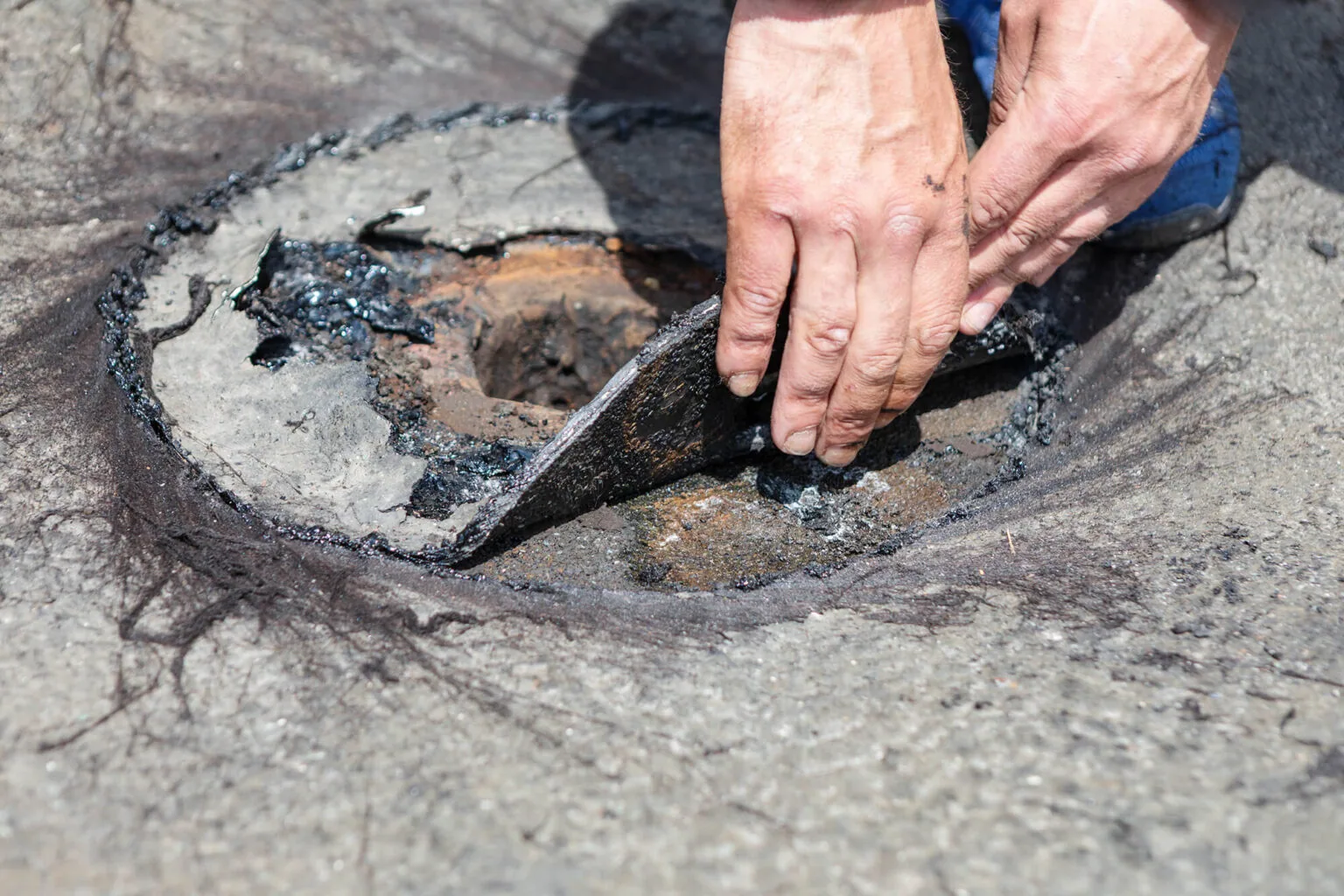
Commercial Roof Seam Failure Repair
Identify the seam system before repair
An open seam is a specific defect, but its repair depends on the membrane, lap construction and condition on both sides of the opening. In Lakewood, CO, we identify the roof system where possible, mark the seam location and inspect adjacent details before selecting a patch or weld repair. The inspection record notes whether the lap is open, contaminated, brittle, fish-mouthed or separated at an edge. It also notes the access and weather conditions that affect preparation and repair.
Lakewood’s commercial inventory spans office, retail, civic and medical properties, including hubs such as Denver West, Federal Center and Belmar. Different building use affects when crews can stage and which rooms need protection, while the roof’s actual membrane and seam construction control the repair method. We verify both at the address rather than assuming one system across a portfolio.
What makes a seam separate from the membrane field?
We check the joint for open edges, poor adhesion or weld, wrinkles, dirt, moisture, prior sealant and movement at a transition. A probe can help evaluate the lap where appropriate, but the inspection record notes the method and limits. We compare the defect with nearby seams and roof penetrations to see whether the opening is isolated or part of a repeated condition. Photos include a scale or clear reference point when useful.
Interior water reports, damp insulation and staining below a seam can help locate the concern but do not establish where water entered. We follow the seam toward nearby curbs, drains, parapets and roof slope changes. If concealed moisture may change the area of repair, a test opening or survey can be proposed. The owner receives a defined question, such as whether a nearby roof zone has wet insulation, before approving destructive testing.
A seam condition inspection can establish the roof map. When foot traffic or service activity is involved, a puncture assessment distinguishes a surface opening from a failed joint.
How does membrane type change seam repair?
Thermoplastic seams may be welded, while EPDM joints use compatible seam materials and details. Modified bitumen and built-up assemblies rely on different laps and surfacing. We confirm the installed system through field details, records or a representative test before specifying the repair material. A coating or sealant chosen without system identification may not bond correctly or address the full lap.
Preparation matters. The repair area must be dry and clean, loose material removed within the approved limits, and the patch extended onto sound membrane as required by the system. For a welded joint, temperature and technique affect the bond; for adhesive seams, surface condition and cure requirements matter. The scope names the patch dimensions, materials, seam preparation, test method and any field quality check. If the membrane is too aged or brittle to accept a local repair, replacement may be the more suitable comparison.
A TPO assembly review can help identify heat-welded membrane details. A EPDM system description explains a different joint approach; field identification still controls product selection.
When is a localized seam repair enough?
A single opening can be repaired if the membrane around it is sound, the lap is accessible and the selected material is compatible. We define the work length and note any surface or substrate issue outside that boundary. If nearby seams fail under probing or the membrane has broad deterioration, the repair scope should identify the pattern and consider testing or larger renewal. We price the measured seam repair and identify any survey needed to assess a wider area.
A seam can reopen when movement, trapped moisture, repeated foot traffic or a failed underlying attachment remains. The inspection records nearby supports, walkway condition and the roof area used for service access. If a mechanically fastened assembly has movement at the perimeter, edge details may need a separate review. Any evidence of deck or insulation damage is documented and submitted for approval before the repair area expands.
A wind detail review may check movement at the same roof edge. A maintenance visit can later recheck the repaired lap and adjacent drainage details.
Which local conditions affect seam work?
A repair call should account for Lakewood’s hail risk and its near-term heat and cold extremes when setting a roof-access window. Hot membrane surfaces can affect safe access and how products are handled; cold may limit adhesive use and cure. We confirm the temperature and roof condition against the product instructions before repair. If snow, frost or moisture prevents proper preparation, the affected seam remains listed as open for a later visit.
The Lakewood Risk II map places ultimate wind at 138 mph on the east side of Kipling, rising to 166 mph on the west. The assembly designer checks the applicable side when reviewing a failed seam. We record edge condition, attachment information available and the area affected. Near Colorado Mills or Lakewood Civic Center, site circulation and deliveries can also constrain the repair window; the property manager approves the actual route and lift position. Near Colorado Mills, the property manager sets the repair crew’s delivery route, staging and access window.
How should the repaired lap be verified?
The closeout file records membrane type, seam location, repair dimensions, preparation, materials, photos and the quality check used. It notes cure time, inspection hold or follow-up needed before a roof section returns to service. If a test opening was made, the file includes how it was restored and whether the resulting evidence changed the work boundary.
Future inspections can use the same roof-zone label and image reference to check for reopening. Where adjacent seams were not included, those remain separate observations rather than implied completed work. The property owner can add the report to its maintenance history and connect it to any interior repair or equipment service record.
Send the Lakewood roof plan, system records, photos, leak locations and access windows. We will identify the seam condition, system-specific repair method and any testing needed before pricing a broader area.
Related Roofing Work
Questions About Commercial Roof Seam Failure Repair
Can a split seam be welded closed?
That depends on the membrane type and the condition of material beside the opening. We identify the system and test the prepared surface before selecting a weld, adhesive or compatible patch.
Why did the seam open again after a patch?
The adjacent membrane, attachment, movement or surface preparation may still affect the joint. We inspect the repair and surrounding roof area before deciding whether a larger correction is needed.
Do you replace every seam on an older roof?
Not automatically. We map the observed defects and check whether they are isolated or repeated, then price testing, repair or renewal supported by the inspection.
Can the seam be repaired in cold weather?
The selected product and preparation method have temperature limits. We confirm the roof and air conditions against those instructions and schedule a return if the joint cannot be prepared correctly.
Will a seam repair stop an interior leak immediately?
We can address a confirmed opening, but the water path may involve nearby details or concealed layers. The report lists any remaining test and follow-up needed to verify the source.
Talk with our Lakewood roof team
Share the Lakewood roof map, system records, leak history and access instructions. We will inspect the lap, document adjacent conditions and price a compatible repair with clear follow-up steps.