
Commercial Roof Inspection
Book a Lakewood Commercial Roof Inspection
An inspection is useful when its findings help an owner choose the next action. We walk the accessible roof areas, identify the assembly where possible, photograph significant conditions and relate each observation to a roof section. A Lakewood, CO commercial roof inspection can support routine maintenance, a leak investigation, a planned capital review or pre-project scope development. The report states what was inspected, what could not be reached and which findings need repair, monitoring or further testing.
Building scale and use shape the survey. At Lakewood Technology Center, an owner may be tracking several office or technology buildings under one program. Academy Park combines business and employment uses where access may involve multiple tenants. We confirm the property list and roof plans so each building receives its own location and condition record.
What does the field inspection cover?
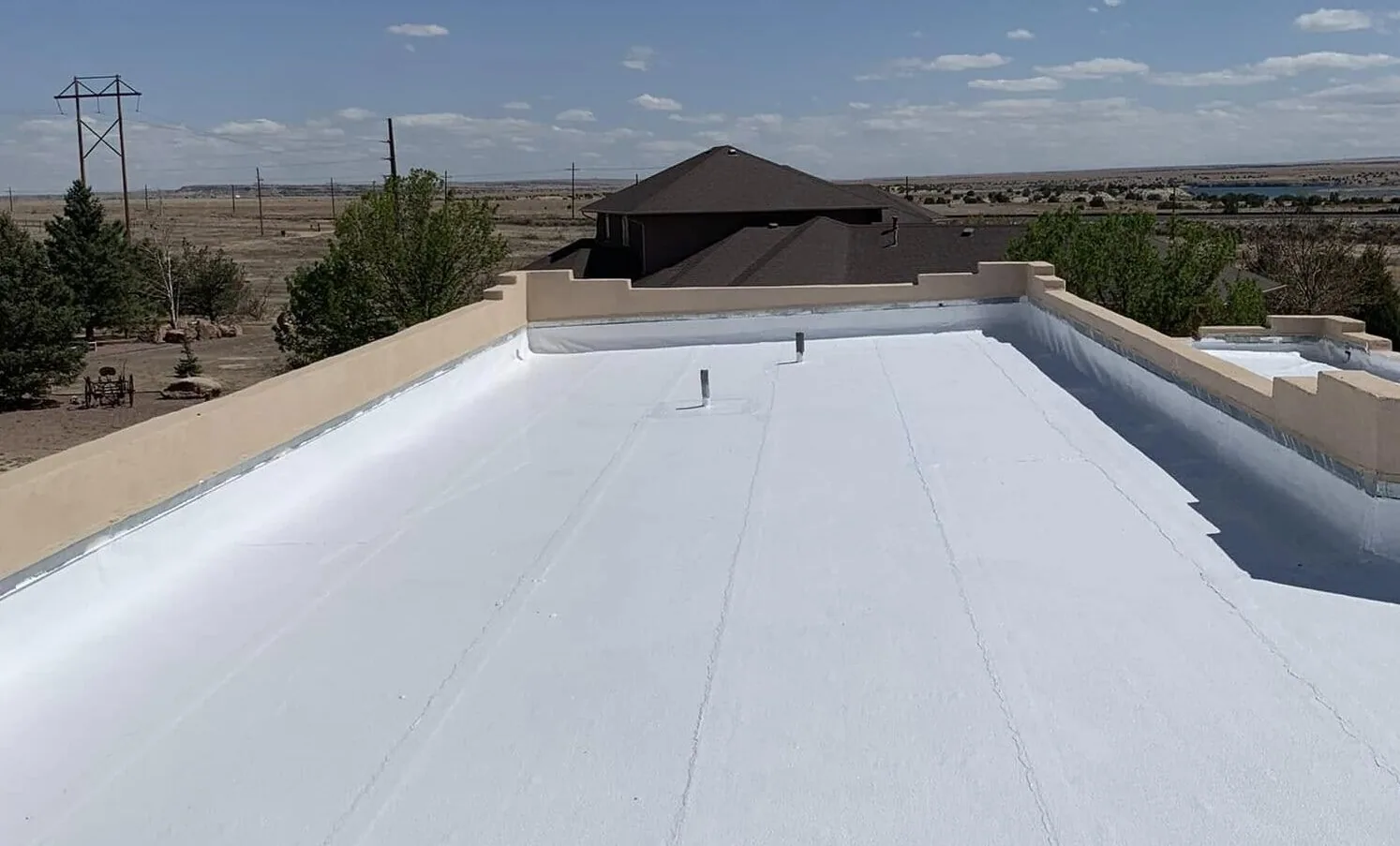
We review visible membrane or panel surfaces, seams, flashing, walls, curbs, penetrations, skylights, drains, scuppers, edges and transitions between roof areas. The survey notes ponding evidence, debris, open details, punctures, surface wear, prior patches and visible concerns at rooftop equipment. Photos identify the roof section and feature, while observations distinguish an immediate defect from a condition that should be watched or tested.
Before the visit, we review available construction drawings, service notes and warranty information. During the walk, the technician checks whether the records align with the installed assembly and records differences that may affect repair. A standard visual inspection does not establish moisture through every layer or verify structural capacity. If moisture mapping is needed, infrared and core-cut surveying provides a separate test plan. For an active interior report, leak tracing focuses on the suspected entry path.
How are findings ranked for an owner?
We identify conditions that require prompt attention, items suitable for scheduled repair, and observations that can be monitored at a future visit. Priority depends on active water entry, potential for further damage, detail location, weather exposure and the consequence of delay. The report describes the evidence behind the priority, rather than using a severity label without explanation. Where there is uncertainty, we state which test or access step would resolve it.
We can format recommendations to distinguish a repair order from a planning issue. A loose edge detail may need prompt correction, while widespread surface aging can warrant a condition comparison before a replacement year is chosen. The report should name the roof area and the observed evidence behind the recommendation. It should also state whether a repair can be priced from the visible finding or if opening the assembly is needed first. This prevents an early budget figure from being mistaken for a confirmed work quantity.
A roof inventory can connect findings to building, section, system, approximate area, age and prior service. Lakewood reports roughly 47 million square feet of commercial, office and retail floor space across its business centers; that citywide measure is not a roof inventory, so owners need property-level records. Roof capital planning can use the inspection findings to sequence repair and renewal across the portfolio. The report can also support a preventive maintenance schedule with repeat observation points.
What should be arranged before the inspection?
We need roof plans if available, safe access instructions, escort or key requirements, active tenant hours and notice requirements. The property contact should identify fragile surfaces, restricted rooms, rooftop equipment that cannot be disturbed and areas that require fall protection or special access. If several buildings share a campus, the visit plan should name each roof and identify its approved route and contact.
Lakewood has west-side light-rail hubs and commercial activity along Wadsworth, Colfax, Union and Alameda. For properties by Lakewood-Wadsworth Station, pedestrian and transit activity may affect parking or material staging even for a non-invasive visit. We confirm the actual entry and roof route with the site contact. The Mississippi Avenue corridor also has distinct employment and industrial access patterns, so tenant schedules and loading rules are checked rather than assumed.
What will the inspection report include?
The deliverable identifies the inspection date, weather context when relevant, roof areas reached, visible assembly, observations, photographs and recommended next steps. It separates field observations from assumptions about concealed layers. If a test cut, interior access or manufacturer consultation is outside the scope, that limit appears in the report. The owner can then commission the additional work with a defined question.
Lakewood’s design criteria set a minimum roof snow or live load of 30 psf, but an inspection report does not calculate an existing building’s capacity. We flag visible concerns and recommend the appropriate professional when structural review is warranted. A TPO assembly has membrane, insulation, attachment and perimeter details that the field report checks against what is installed at the property.
When should the roof be inspected again?
Follow-up frequency depends on roof age, system condition, recent repairs, debris exposure, storm activity and the owner’s maintenance program. We can recommend a return interval and define details that should be checked after a repair or weather event. A repeat inspection is more meaningful when it reuses the same roof map and identifies whether an earlier finding changed.
For properties with recurring service, we can retain stable roof-section names and photo locations so later reports can be compared directly. If a tenant, department or building name differs from the drawing label, the report can include both names to prevent a location mismatch. That consistency is particularly helpful when the owner manages roofs across separate campuses and shares findings with finance, facilities and outside consultants.
Send the site list, roof plan, prior reports and the decision the inspection needs to support. We will confirm the accessible area, perform the field review and return a section-based record with clear priorities. The asset manager can use it to approve a repair, request moisture testing or set a budget review with fewer unknowns.
Related Roofing Work
Questions About Commercial Roof Inspection
Does a roof inspection include core cuts?
A visual inspection and a moisture survey are different scopes. We list any core cuts, infrared readings or other tests separately so the owner knows how concealed conditions will be evaluated.
Can you inspect multiple buildings in one visit?
Yes, when the property list, access windows and roof routes are arranged. Each roof receives its own location record and findings so observations are not blended across buildings.
Will the report certify the roof’s structural capacity?
No. The inspection documents visible roof conditions. Structural capacity questions require review by the appropriate design professional using building-specific information.
What if part of the roof is inaccessible?
The report identifies the area not reached, the reason and any access step needed for a complete review. It does not treat an inaccessible section as inspected.
Can an inspection help with budgeting?
Yes. Section-based findings, photos and priorities can support repair planning and replacement comparisons when paired with roof area, age, warranty and project records.
Talk with our Lakewood roof team
Send your property list, roof plans and the decision the inspection must support. We will confirm access and prepare a section-by-section findings report.