
Commercial Roof Repair
Schedule a Lakewood Roof Repair Review
A repair request usually arrives with a symptom: a ceiling stain, a loose edge, a split seam or a drain that is not clearing. The repair itself depends on what caused that symptom and how far the condition extends. For a Lakewood, CO commercial property, we inspect the roof area above the report, trace the path water could follow and compare the detail with nearby seams, penetrations and transitions. The work order records the finding, repair boundary and any condition that still needs testing, so the facility team can tell what was corrected.
We plan around the roof section, building use and access window. Near West Colfax, storefronts and service businesses may need entrances and deliveries kept clear. At Denver West Business Park, office and employment uses can require a scheduled crew route and coordination with building management. We verify the actual property conditions before dispatch.
How is a repair boundary found?
Water can travel beneath a membrane before it appears inside, so we do not use the ceiling stain as the roof repair limit. The technician checks the membrane field, laps, flashings, curb corners, penetrations, drains, scuppers, edge metal and prior patches in the area. We note slope and drainage paths, inspect adjacent details, and take photos that connect the reported symptom to the roof condition. If the source remains uncertain, we explain what additional testing would narrow the location.
We ask when the stain first appeared, whether it changes during rain or snowmelt, and whether previous repairs altered the detail. Those clues help distinguish an intermittent drainage issue from a failed seam or a penetration that moves with equipment vibration. If interior access is necessary, the facility contact identifies rooms that require notice, protective covering or an escort. The proposal records the conditions observed on the visit, rather than implying that an inaccessible zone was inspected.
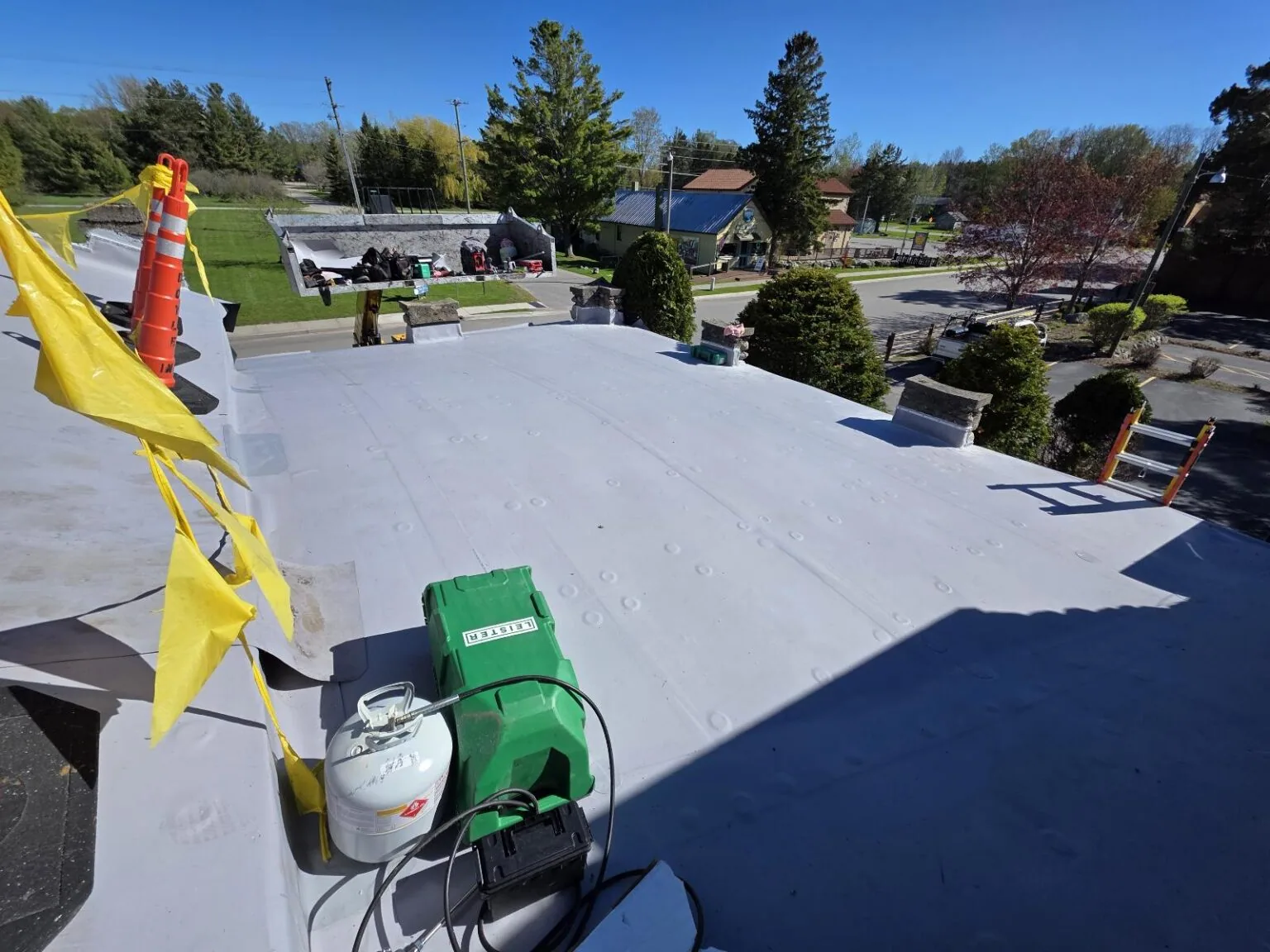
The work record distinguishes a visible defect from a suspected concealed condition. A repair may include cleaning and preparing the substrate, restoring a compatible seam, resetting a flashing detail or replacing a damaged component. Materials and methods need to match the existing assembly and warranty restrictions. For an assembly-wide baseline, a commercial roof inspection can establish condition and priorities; persistent interior moisture may call for a moisture survey rather than another surface patch.
Which roof details commonly require repair?
Membrane seams can open at laps or terminations. Flashing may pull away from a curb, wall or penetration. Metal edges can loosen, corrode or allow wind-driven water behind a fascia. Drains and scuppers can collect debris or show separation at the membrane connection. Skylight and equipment details need a compatible seal and secure transition. We document each issue separately because the same roof can contain different failure mechanisms and repair materials.
If a detail is part of a larger system concern, the scope should say so. Drain and scupper work addresses water collection and discharge components, while edge metal and coping service follows perimeter conditions. On a single-ply assembly, we check the membrane manufacturer and detail requirements before choosing a patch method. A repair that is not compatible with the membrane can create a new weak point beside the original defect.
What should the building team expect on repair day?
Before arrival, the contact confirms roof access, escort or key requirements, tenant notice, parking, lift position and any equipment that must stay online. The crew route is set to avoid restricted areas and to bring only the materials needed for the approved scope. If access is through an occupied floor, we establish the entry point and cleanup path with the site contact. A repair is not scheduled as a roof-only task when its staging affects loading, staff or customers below.
Hail and extreme temperature conditions are near-term Lakewood hazards, so post-storm review can involve several roof details across one property. We separate urgent water entry from inspection of other suspected impacts and keep each roof section tied to its own photos and work record. A storm-damage evaluation can cover broader impact mapping. Properties around Downtown Lakewood and Belmar may have mixed uses and pedestrian activity; the building manager confirms the delivery and work window for the specific address.
How are repair costs and limits documented?
Pricing reflects roof access, mobilization, repair area, substrate preparation, material compatibility, detail complexity and whether testing or temporary protection is needed. We state what the quoted work includes and distinguish it from optional investigation or concealed-condition work. If opening a detail reveals saturated insulation, damaged deck or a wider separation, the technician documents the finding and asks for approval before extending the repair.
Repair records help owners make decisions across a portfolio. Lakewood has about 47 million square feet of office, commercial and retail floor area across its business centers. We measure each property’s roof separately and tie repair quantities to that survey. Capital planning can rank repair needs by observed condition, while preventive maintenance can track recurring details and seasonal visits.
What is included in the repair closeout?
Closeout notes the report location, observed roof condition, repair method, materials, photographs and limits of the work. Where a test or follow-up is recommended, it remains an open item rather than being described as fixed. The roof plan can identify the section and detail location so that future technicians do not repeat exploratory work without the prior record.
When the repair connects to a manufacturer system, we note the material and method used, plus any cure or reinspection interval specified by the product requirements. A photograph before the repair and another after completion make the file more useful than a general invoice description. The owner can add the record to the roof inventory and compare repeat visits by section, helping decide whether a recurring item still fits maintenance or has become a larger renewal question.
Send the property address, roof access instructions, leak history and any available system or warranty documents. We will inspect the affected details, explain whether the request fits a contained repair or needs broader evaluation, and provide a written scope. After the work, the building team receives a record of what changed and what still needs attention.
Related Roofing Work
Questions About Commercial Roof Repair
Can a repair be completed from the ceiling stain location?
Usually the roof source must be traced above and around the interior symptom. We inspect drainage paths, seams and transitions because water can travel before entering the building.
Will a patch stop every recurring leak?
A patch addresses the observed defect when the substrate and surrounding assembly are suitable. If moisture extends beyond the opening or another detail is involved, the report identifies that additional scope.
Do repairs affect an existing roof warranty?
Warranty terms vary. We review available records and use a compatible repair approach where required; the owner should confirm any warranty authorization process before work begins.
What happens when concealed damage is found?
The crew documents the condition and its location, secures the work area and requests authorization for added scope. The approved repair boundary is updated before further removal.
Can you repair a roof while the building stays open?
Many repairs can be sequenced around operations after the site confirms entry, loading, noise and equipment limits. The work plan states the crew route and expected access window.
Talk with our Lakewood roof team
Describe the leak or roof detail, share access instructions and attach prior reports if available. We will inspect the condition and return a defined repair scope.