
KEE Roofing
Review a Lakewood KEE Specification
A specification that names KEE should be checked against the membrane product actually proposed. KEE describes a PVC-based alloy formulation, and products vary in composition and performance data. For a Lakewood, CO commercial building, we match the specified material to the substrate, exposure, attachment and repair requirements before setting the procurement sequence. The estimate lists the required membrane and accessories so an alternate cannot be substituted without review.
At government and office properties near Lakewood Civic Center, the facility contact sets escort and roof-access rules. The Alameda Avenue corridor combines commercial owners and public-facing activity that can affect staging. We verify each site’s operating windows and material route.
What does the KEE specification need to identify?
The project documents should identify the membrane formulation, thickness, reinforcement, color, attachment, substrate, flashing components, seam procedure and acceptance checks. We compare proposed product data with the design documents and clarify any difference before ordering. Accessories at drains, walls, curbs and perimeters need to be compatible with the specified system. If an existing KEE roof is being repaired, we identify its product and prior repair materials rather than assuming that all PVC-based sheets can be welded or patched the same way.
When an alternate is proposed, compare the material designation, thickness, reinforcement, fastener or adhesive schedule, flashing accessories and repair method in one table. A change in sheet formulation can affect how a detail is made or later maintained. We record clarifications in the submittal log and make sure the crew has the approved version before material is released to the roof.
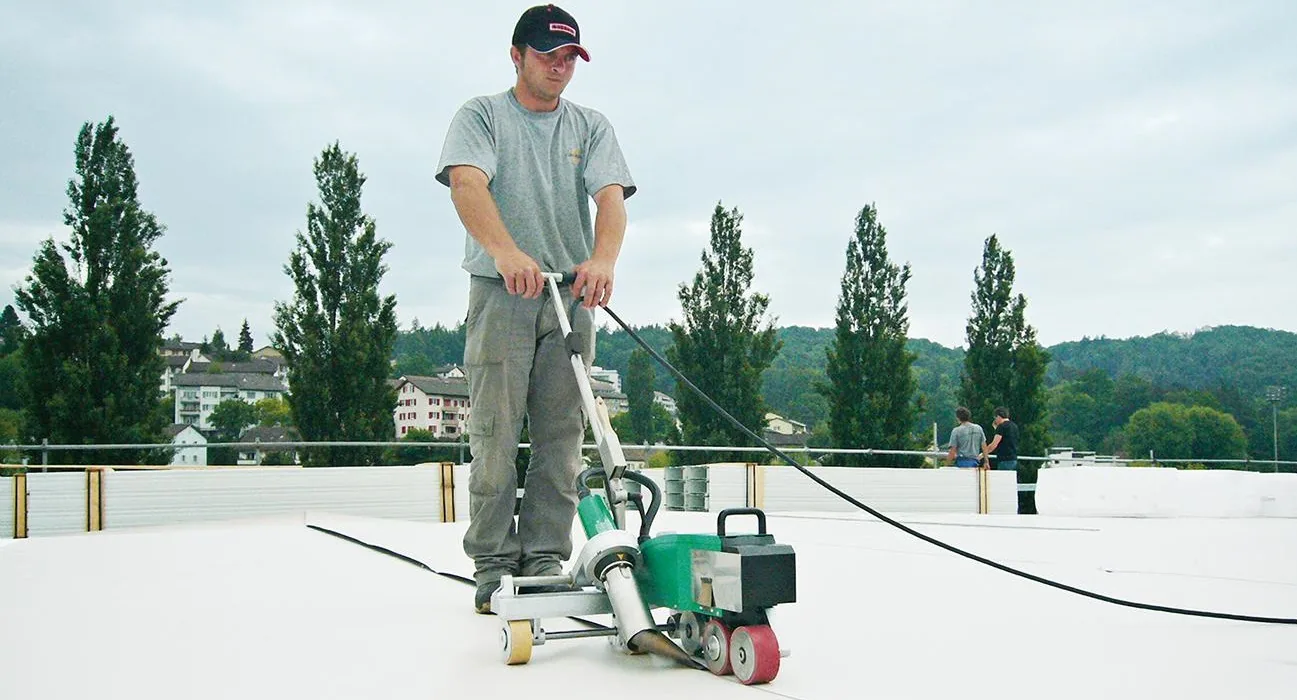
A thermoplastic sheet uses heat-welded seams, but settings and preparation depend on the product and field conditions. Trial welds and quality checks are included in the production plan. PVC membrane options and TPO assemblies are relevant comparisons, not automatic substitutes for a KEE specification. We preserve the owner's selected basis unless the project representative approves a change.
How are exposure and maintenance matched to the material?
We identify exhaust, cleaning agents, rooftop traffic, stored materials, standing water and service activity that may contact the membrane. The project team checks those conditions against published product data. A chemical splash zone or frequently serviced unit can need additional protection, a different detail or an operating change. We map these locations and include them in the inspection route instead of treating the entire roof as one uniform exposure.
Lakewood’s employer base includes healthcare, government, education, financial services and medical-device sectors. The facility contact identifies the equipment, roof exposure and work windows at the property. A medical-office roof plan can help organize access and service routes, while a condition inspection can document seams, penetrations and prior repairs. We review the installed material and the actual roof use together.
What field checks protect the seam and flashing work?
Before the sheet is placed, the crew confirms a clean substrate, attachment pattern, board joints and protection of drains and equipment. Welds are checked in the locations and manner required by the approved quality plan. Corners, T-joints, patches and transitions receive their own review because the broad field seam does not represent every detail. The daily record notes test results and corrections by roof section.
At the start of each production day, we confirm ambient and surface conditions against the product instructions and make a test seam before the main run. Welded laps are checked after cooling, not while the surface is still hot. A failed check is repaired and retested before the section is marked complete. This quality sequence is written into the daily record so field progress can be reviewed against the specification.
At curbs, skylights and equipment supports, we match flashing height and membrane termination to the approved detail. Perimeter metal must retain the attachment and closure specified for the building. The owner’s access window determines when HVAC or other equipment can be isolated; the crew route avoids restricted spaces and the material drop is set before opening a section. Insulation and cover-board coordination helps confirm the assembly elevation around drains and equipment.
When should the roof be repaired or renewed?
A local defect may be repairable when surrounding membrane, attachment and substrate remain sound. Recover or replacement becomes a broader question when the roof has widespread moisture, repeated seam failure, incompatible patches or an assembly that no longer meets project requirements. We map affected areas, use testing where needed and make the recommendation follow verified boundaries. A KEE label alone does not tell the owner whether an existing roof can be retained.
Inspection calendars for Lakewood KEE roofs should include post-hail review and temperature-related access checks. A post-event survey should record visible impact and distinguish it from aging or previous work. Recover evaluation can assess whether layers may remain, and replacement planning can define removal, insulation and transition quantities. Where a single-ply scope remains appropriate, the selected material and its detail requirements stay explicit in the estimate.
How is the specified system handed over?
Turnover records the installed product identification, assembly, sections, seam checks, detail photos, repair notes and any deferred work. Product data and maintenance instructions are included where required by the project. The roof plan marks access routes, drains, penetrations and equipment service zones so the next inspection can find those locations without searching the full surface.
The property team should also retain names for each roof zone and the service route used to reach equipment. When later maintenance introduces a new curb or patch, the record can be checked against the original detail before a different material is introduced. That keeps the repair history connected to the selected system and helps the owner maintain a consistent closeout file across future phases.
Share the approved specification, roof plans, exposure details, prior service notes and operating schedule. We will check the material requirements, map installation sections and identify any open product or access question before ordering. After work, the owner receives a record tied to the selected KEE assembly and approved detail set.
Related Roofing Work
Questions About KEE Roofing
Is KEE the same as every PVC membrane?
KEE identifies a PVC-based alloy formulation, but products and specifications differ. We confirm the named product, physical properties and accessories before preparing the assembly scope.
Can KEE seams be heat-welded?
Thermoplastic KEE membranes are joined under product-specific conditions. Trial welds and required field checks confirm the selected sheet and settings before production proceeds.
Can a different membrane be substituted for KEE?
Only after the design or owner representative reviews the alternate. The proposed product data, detail compatibility and project requirements should be compared before procurement.
How should rooftop chemical exposure be reviewed?
The facility identifies the substance, discharge location and operating pattern. The project team then compares that exposure with the product data and adds protection or another system when needed.
What documents are useful after installation?
Keep the product submittal, installed section map, seam checks, detail photographs, repair notes and maintenance requirements with the building’s roof records.
Talk with our Lakewood roof team
Share the project specification, roof plan, equipment schedule, exposure details and access windows. We will map the KEE assembly, seam checks and approved section sequence.