
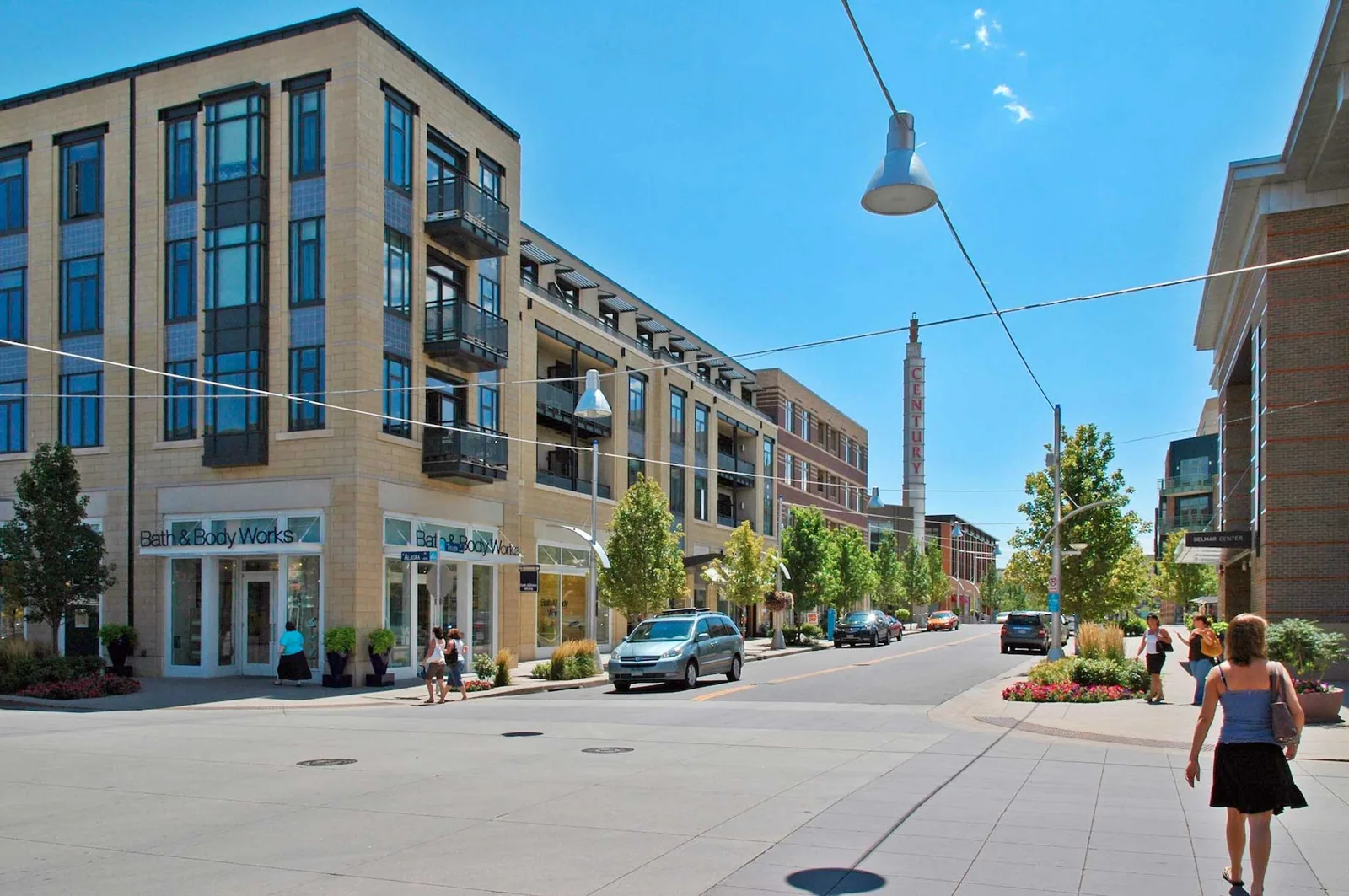
Downtown Lakewood / Belmar
Coordinate the Belmar roof sequence with property operations
A mixed-use roof in Downtown Lakewood / Belmar must be inspected with entrances, work areas and active operations in view. Downtown Lakewood / Belmar combines retail, employment, housing, entertainment, government and visitor activity. Belmar redeveloped the former Villa Italia Mall site and now functions as Lakewood’s downtown center. The reinvestment area also includes Lakewood City Commons and Coca-Cola All Star Park. Those uses make access coordination part of the roof scope, while the building records and field inspection establish the actual roof assembly.
We confirm the property contact, roof access route, lift position, tenant or event windows and any equipment that must remain available. The survey labels each roof section and transition, then records visible conditions and any area not reached. This gives the owner a practical work boundary before materials are staged or an occupied area is exposed. A nearby civic or event schedule may affect timing, but the facility manager confirms the operating rules for the property under review.
How should the first roof visit be organized?
Before the crew climbs, the facility lead confirms access credentials, roof hatch condition, escort needs, staging limits and routes that remain open to tenants or visitors. We review roof drawings, past repair notes and reported leak locations, then map the walk to drains, edges, curbs, penetrations and prior patches. The survey notes membrane seams, flashing conditions, ponding or drainage restrictions, and equipment clearances. Each photo is connected to its roof zone so an asset manager can compare the finding with the plan.
For a mixed-use block, the person reporting a leak may be a tenant or an operations contact, while access approval may sit with property management. We identify both contacts and coordinate a time that allows roof inspection without entering a protected room or interrupting an event. If snow, ice or an active system makes a section unsafe, the report identifies the missed area and the requirement for a return. A roof condition survey can record that scope.
When concealed water is a concern, a moisture scan may help direct tests if the roof construction and weather support the method.
What keeps roof work separate from public activity?
The project map sets the crew route, material drop, lift position and area to be closed for each shift. The property team identifies entrances, loading, service lanes, tenant notices, event periods and fire access that cannot be blocked. We tie the work zone to those controls and mark a watertight closure point before removal starts. At the end of the shift, the superintendent records the finished roof boundary, temporary tie-in, photos and any work held for inspection.
Lakewood City Commons and Coca-Cola All Star Park are named in the Belmar reinvestment area, alongside commercial redevelopment. Those public and commercial uses make it useful to ask the property contact about scheduled activity and access controls; they do not establish when any particular event occurs. The owner or manager supplies the calendar. A roof project in West Alameda / Belmar still needs a separate roof map and access approval.
For an occupied facility, phased reroof planning connects tenant windows to the crew’s production sequence.
How should mixed-use leak reports be checked?
We compare the interior report with roof details above and around the affected space. The inspection checks field seams, wall transitions, penetrations, curb corners, drains and prior repair material. Water may move along a deck or pipe before it appears in a room, so the closest roof detail is not automatically the source. The written finding separates a visible membrane opening from a suspected wet layer and names any test needed to establish the repair boundary.
Lakewood’s climate planning treats hail, extreme heat and extreme cold as near-term hazards. After hail, the survey maps functional punctures and displaced accessories separately from cosmetic marks. Low temperatures can affect repair materials and cure; hot roof surfaces change safe work periods. The crew checks task conditions against manufacturer instructions and records a hold if a durable repair cannot be completed. If the leak threatens an occupied room, temporary protection can be scoped while the permanent repair is evaluated.
A commercial leak repair plan records the confirmed detail and limits. If a hail event is involved, hail-damage repair can document related impacts across roof zones.
When should the owner compare repair with replacement?
A repair is appropriate when the defect is defined and surrounding assembly remains serviceable. Several recurring failures, widespread moisture, drainage problems, deteriorated membrane or an obsolete transition can make a broader project more practical. We report the roof areas inspected, show evidence in photos and identify where a scan or test opening could reduce uncertainty. The owner can then compare a repair scope with replacement by roof section, including temporary protection and the cost drivers tied to access or occupancy.
Lakewood’s published design criteria include snow and wind provisions. They guide design review but do not state what a specific Belmar roof can carry or how it is attached. Drawings and project engineering establish the proposed system and edge details. A replacement phase plan should account for retail, government, housing and visitor activity where those uses apply to the facility. Work may be split by roof zone, but each phase needs safe dry-in and a clear route for materials.
A roof replacement proposal should list assembly, tear-off assumptions, access, schedule dependencies and inspection holds. If the building has multiple roof types, the Belmar roof map labels each assembly and transition within this property.
Which handoff details should stay with the asset?
The owner’s file should contain the roof plan, system submittals, inspection report, repair tickets, before-and-after photos, access instructions and approved changes. Label sections so future service can locate a patch, drain, curb or transition without depending on the memory of a prior manager. For reroofing, retain phase closeouts, substrate observations, installed materials, temporary tie-ins and unresolved items. Warranty terms and maintenance duties come from the actual issued documents.
As Belmar continues to function as the downtown center, property uses and access patterns can change. A roof plan should be revised when equipment, walkways or tenant areas change. Later maintenance can compare the updated plan with field observations and distinguish a new condition from an older repaired detail. The record helps schedule work, but it does not replace a current inspection before a repair decision.
Send the Lakewood address, roof plan, tenant and event schedule, leak reports and access rules. We will return a zone-based condition report and a repair or replacement sequence with approvals and daily closeout listed.
Related Roofing Work
Questions About Downtown Lakewood / Belmar
Can a roof crew work during a Belmar event or busy retail period?
The property contact confirms event dates, entrances, deliveries and any restricted areas. We set work windows and crew routes around those controls, then record the active roof zone each day.
Does a tenant leak report tell you where the roof is open?
It identifies where and when water appeared indoors. We compare that report with roof details and separate confirmed defects from suspected moisture before setting repair limits.
What belongs in a mixed-use roof access plan?
The plan identifies the property contact, approved entry, escort, lift location, material staging, protected rooms and routes that must remain open. Any return access requirement is recorded.
When does a repair become a capital project?
Repeated defects, broad moisture or assembly deterioration may support replacement review. The condition map and any testing show how much is known before the owner compares the options.
What should be recorded after each work shift?
Daily closeout notes the roof zone completed, photos, temporary tie-ins, inspections, weather holds and open decisions. The owner keeps those items with the roof map and service history.
Talk with our Lakewood roof team
Send the Lakewood property address, roof documents, access procedures, tenant calendar and leak history. We will map work zones and identify the approvals needed before the next visit.