
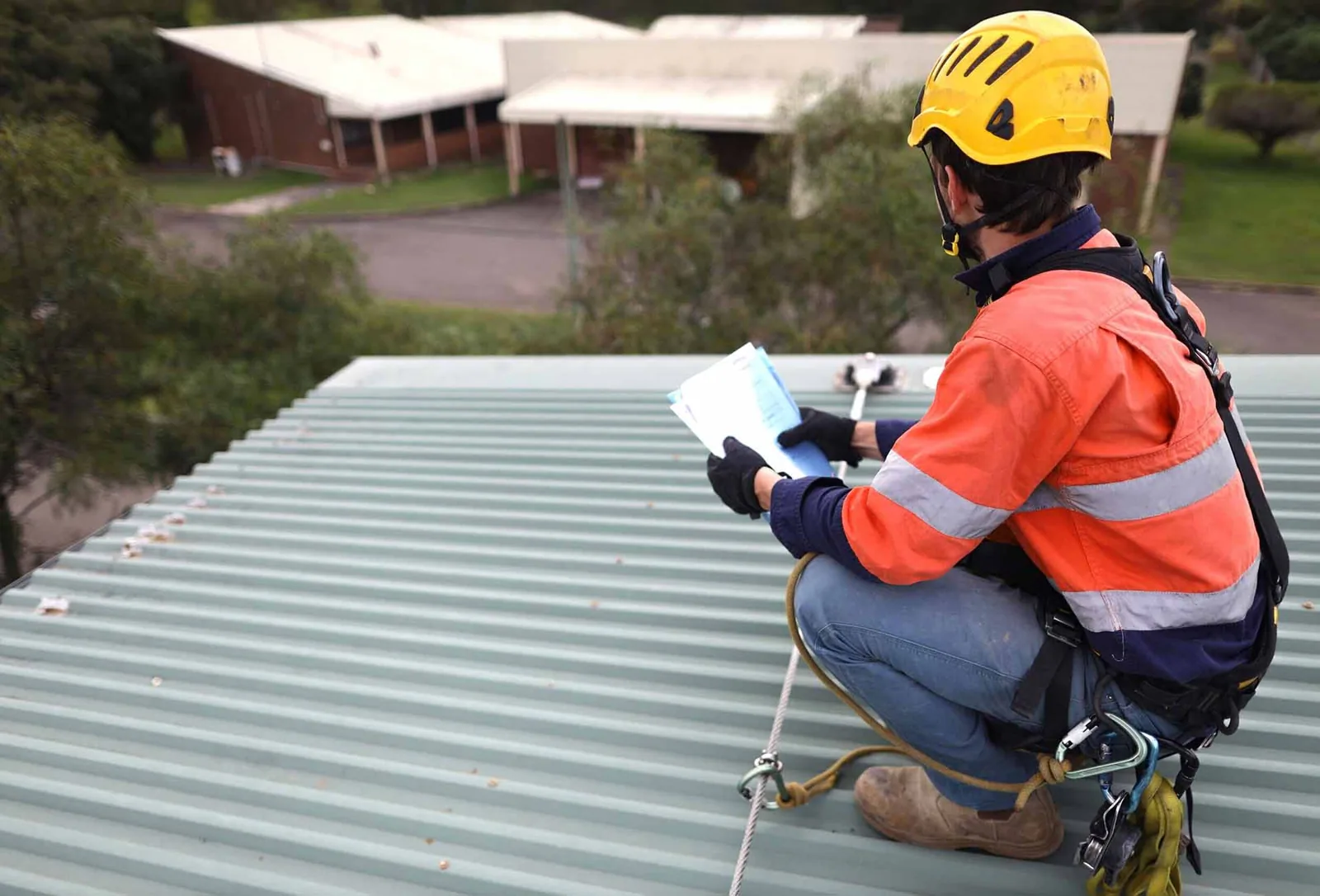
Emergency Commercial Roof Repair
Report an Active Commercial Roof Leak
An active roof leak creates two work streams at once: interior protection and a safe exterior assessment. The first decision is how to protect people, contents and critical operations while roof access is assessed. Emergency roof repair in Lakewood, CO begins with the reported location, active conditions, weather and a contact who can authorize site access. We determine whether the crew can reach the roof safely, whether the leak can be isolated and what temporary dry-in is feasible. Permanent repair follows when the substrate and conditions allow a compatible, durable installation.
Response planning depends on the property. At St. Anthony Medical Campus, the facility contact confirms clinical access and escort requirements before the crew is routed. For a property in Rooney Valley, the contact confirms loading, equipment and access limits. The dispatcher records the address and operating priorities before assigning the response.
What information helps dispatch the right response?
Tell us where water is entering, whether it is actively dripping, what rooms or equipment are affected, and when the condition began. Include recent wind, hail, rain or snowmelt, roof access instructions, building hours and any restricted areas. If there is a ceiling collapse, exposed wiring or unsafe water accumulation, keep people clear and contact the appropriate emergency services or building safety personnel. Roofing crews can address roof conditions after the scene is safe for work.
Useful photos show the affected room, roof area if visible from a safe vantage point, and any water path without asking staff to climb or cross a wet roof. A short video can help communicate whether the leak is intermittent or flowing, but the response team still verifies the condition onsite. Keep a list of essential equipment and shutdown contacts available so the site lead can make decisions without delaying a safe inspection.
The dispatcher identifies a site contact, access method and available photos or roof plans. We need to know whether there is a hatch, ladder, escort rule, key or lift requirement, and whether rooftop machinery can be approached. That allows the crew to bring suitable temporary materials without treating a photograph as a confirmed diagnosis. A leak trace follows the reported interior symptom to a roof detail and documents what the visit confirms.
What happens during stabilization and dry-in?
At arrival, the crew reviews hazards, confirms the access route and checks the affected interior and roof area where conditions permit. Immediate protection may include placing containment below a drip, moving contents, limiting room access or setting a temporary cover above the suspected entry point. The method depends on wind, roof condition, water movement and available attachment points. A temporary cover must be secured for the observed conditions and checked against the risk of creating another hazard.
Dry-in is a temporary measure, not a completed roof repair. We mark the protected area, record the materials and installation limits, and tell the contact what monitoring is required. If the roof is saturated, icy, electrically unsafe or otherwise inaccessible, the team states the constraint and coordinates a safer next window. When safe, a permanent repair visit follows to replace temporary protection with an assembly-compatible repair and inspect adjacent details.
How can operations continue while the roof is stabilized?
The building manager decides which rooms, corridors, equipment or loading areas need restricted access. We coordinate with that decision and keep the crew route away from active tenant traffic. If interior containment is required, the contact can identify sensitive rooms, contents or processes before the crew enters. In a multi-tenant property, one named representative should consolidate access instructions and communicate any changes during the response.
Lakewood employers span healthcare, government, education, retail and light-industrial activity. Hail, extreme heat and extreme cold are near-term hazards in the city. We prioritize the reported water entry, then document broader inspection as a separate scope. Permanent work at an occupied property can use phased occupied-building work to coordinate tenant windows and equipment schedules. At Denver West Village, the property contact confirms loading and pedestrian routes before materials are staged.
What will be priced after the immediate response?
The emergency visit and the permanent scope can have separate charges. The first may cover dispatch, safe-access review, temporary protection, interior containment and documentation. Follow-on work may require opening the roof, drying or removing wet materials, replacing insulation, repairing the membrane and restoring flashing or edge details. We state what was authorized during the emergency and request approval before expanding work beyond the stabilization boundary.
For Lakewood, the minimum roof snow/live-load design value is 30 psf. If the crew observes unusual deflection, movement or deck deterioration, it keeps the area clear and refers structural questions to the appropriate professional. A condition inspection can evaluate remaining sections after the immediate hazard is controlled; a capital plan can then organize permanent repairs and renewal by priority.
What will the emergency report make clear?
The report records the arrival conditions, area inspected, source confirmed or suspected, temporary measure installed, access limitations, photos and next recommended action. It identifies who received the instructions and whether follow-up is scheduled or awaiting approval. If the roof source is still uncertain, the report says so clearly. That distinction matters because a dry interior after tarping does not prove the permanent defect has been repaired.
Temporary protection should be checked by the designated contact after the crew leaves, using only a safe observation point. Report movement, renewed water entry or a change in the affected area promptly. The crew’s instructions identify whether a return visit is needed after a stated weather event or once the surface dries. This follow-up closes the gap between initial stabilization and repair approval.
After the immediate response, share the building’s roof plans, prior service records and warranty documents so the permanent scope can account for the existing system. We will define what the temporary work protected, inspect the affected details when safe and provide a repair sequence for approval. The facility team can use the photos and roof location to brief tenants and track any remaining interior restoration.
Related Roofing Work
Questions About Emergency Commercial Roof Repair
Can you confirm a 24-hour arrival window?
Response timing depends on current conditions, crew availability, access, weather and safety. We confirm the dispatch window and required site contact before mobilization rather than promising a time without those details.
Is a tarp considered a completed roof repair?
No. Tarping or other dry-in is temporary protection. The closeout identifies its location, installation limits and the permanent work still required.
Should staff go onto the roof to find the leak?
No. Keep untrained personnel away from roof hazards and follow the building’s emergency procedures. Provide the access information to the response team and let qualified personnel assess the roof.
Can emergency work include interior cleanup?
The initial scope can include limited containment or coordination to protect contents, depending on authorization and site conditions. Water extraction, hazardous-material work and finish restoration may require other qualified providers.
What if the roof cannot be reached safely at night?
We document the access or weather limitation, help the contact consider safe interior protection and arrange the next workable inspection window. No roof work proceeds through an unsafe route.
Talk with our Lakewood roof team
Call with the property address, affected area, current water entry and roof access instructions. We will confirm dispatch details and explain the immediate stabilization options.