
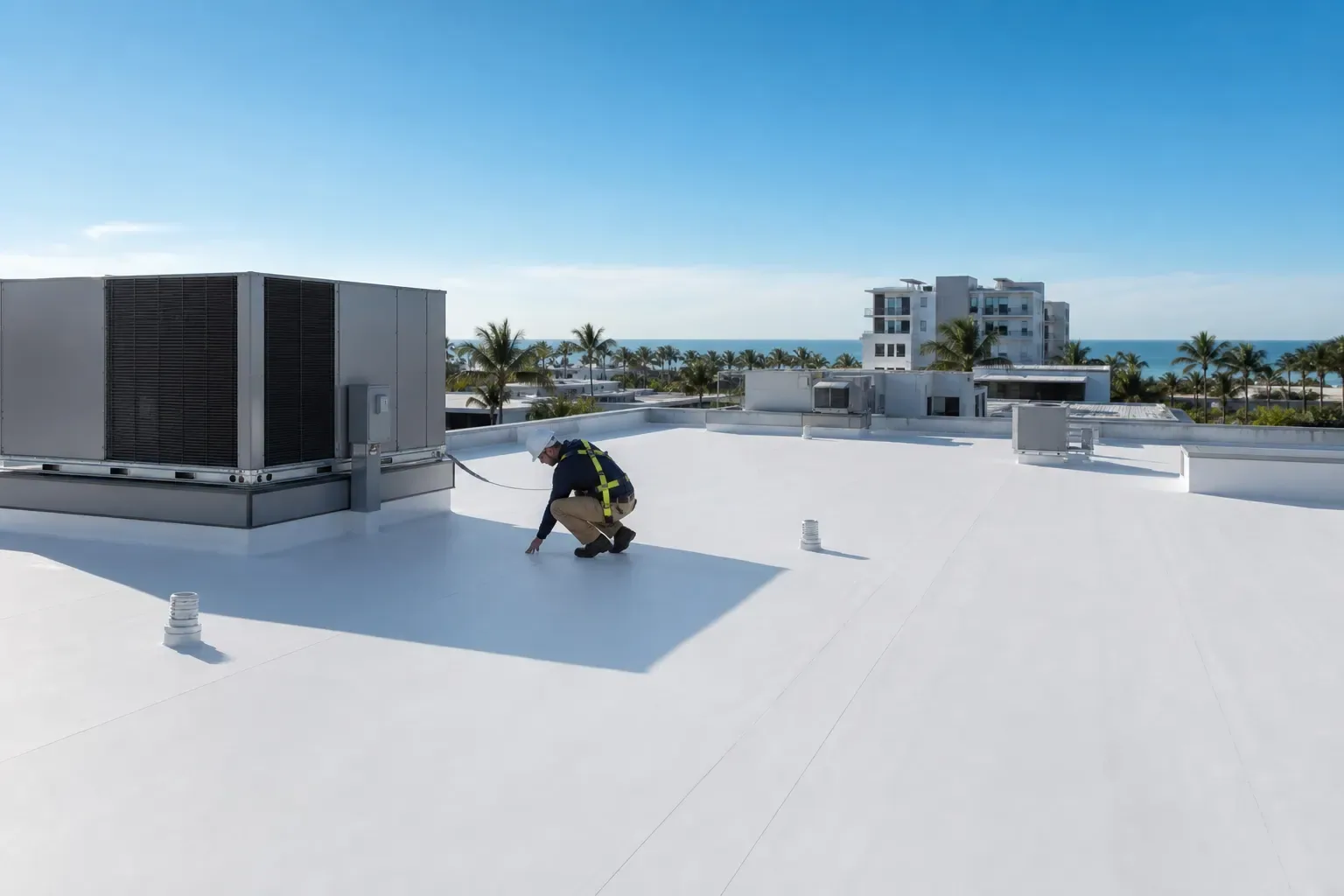
GAF Commercial Roofing Systems
Review a GAF assembly against the Lakewood building
An office or retail roof specified with GAF products still needs its own deck check, drainage map and attachment plan. In Lakewood, CO, we start by identifying whether the proposed assembly uses EverGuard TPO, PVC, PVC KEE, asphaltic material or a coating system. We compare the drawings with roof conditions, curbs, edges, drains and the access window before selecting an installation sequence. The brand name alone does not determine which system suits the building.
Denver West and Colorado Mills combine office and large retail uses, while Belmar includes a mixed-use downtown setting. Those local property contexts affect delivery and tenant coordination, but we verify the actual structure and roof assembly onsite. If an existing membrane differs from the project record, that difference is carried into the scope before materials are ordered.
Which GAF system should be compared?
GAF lists commercial TPO, PVC, PVC KEE, asphaltic and coating systems. EverGuard thermoplastic membranes use heat-welded seams, with product options for adhered, mechanically attached, induction-welded and other specified configurations. PVC and KEE can be evaluated where the building’s exposures or project requirements favor those materials. Asphaltic assemblies use a different layered construction, while coatings depend on a suitable existing substrate.
We review the project documents for membrane type, thickness, cover board, insulation, attachment and accessories. Then we check whether the deck, perimeter, penetrations and drainage details can receive the selected assembly. The designer’s requirements and building-specific code review control the final specification. We do not select a product from a color, label or broad category without confirming its compatibility with the actual roof. When the bid allows an alternate product, we compare attachment, flashing details, insulation, edge conditions and maintenance access on the same roof plan. A Johns Manville commercial system can be evaluated against those same building requirements, with its own approved assembly and details.
We compare a TPO roof assembly with a PVC system against the building’s requirements. If Carlisle materials are specified, we check their approved details against the same roof conditions.
What controls installation quality?
Before membrane arrives, the crew verifies substrate readiness, roof zones, insulation layout, fastening pattern, adhesive requirements and edge conditions. The sequence identifies material drop, lift position, equipment coordination and any rooms below that need protection. Thermoplastic laps are welded using specified equipment and conditions; the crew checks seams and detail terminations before they are covered. A daily closeout lists the completed section and the tie-in protecting the remaining roof.
Lakewood’s temperature extremes can change adhesive handling and cure, while summer heat affects safe work hours and membrane surface temperature. If conditions fall outside the product instructions, the task moves to another approved window. Lakewood faces hail, extreme heat and extreme cold as near-term hazards, so an owner may include event inspections in the maintenance record. The installation plan keeps actual product requirements and observed conditions visible.
A roof inspection establishes existing conditions. At Denver West and Colorado Mills, the property contact confirms the material drop, lift position and tenant access before the crew is scheduled.
How should a GAF roof repair be scoped?
We identify the membrane family and inspect seams, punctures, flashings, curbs, drains and prior patches. The repair material must match the system and the exposed surface must be prepared according to applicable details. We photograph the opening and adjacent roof, then state the patch boundary. If moisture or damaged deck appears beyond it, the crew pauses for measurement and owner approval rather than extending removal without direction.
For a GAF TPO or PVC assembly, a compatible thermoplastic patch and welded seam may be appropriate when the membrane around the defect remains sound. Coating work requires a separate check of existing layers, adhesion and drainage. Replacement can be considered if defects are repeated or concealed layers are unsuitable for repair. The proposal separates confirmed quantities from tests, allowances and design decisions.
A commercial repair scope can define the correction. A coating restoration review can evaluate an existing surface that may accept a coating.
What should an owner track after installation?
Keep the approved assembly documents, roof map, inspection photographs, repairs, equipment changes and maintenance visits together. The owner should compare the warranty certificate with the actual installed areas and follow the issuer’s stated terms. Our closeout lists material descriptions, visible details, inspection records and open items. The owner reviews the issued warranty terms with the manufacturer.
Lakewood’s Risk Category II ultimate wind design speeds are 138 mph east and 166 mph west of Kipling, and its minimum roof snow/live-load value is 30 psf. The project designer applies those criteria to the building. Facilities can retain relevant drawings with the roofing record and request a structural review when needed. At Federal Center and St. Anthony Medical Campus, each property representative confirms facility access and operating windows before a future service visit.
How does the work file support a future decision?
The closeout identifies the roof area installed or repaired, the transition details photographed, inspections performed, approved changes and any items still requiring attention. If a concealed condition altered the planned assembly, the file connects the exposed finding with the owner’s direction. Roof-zone labels should match the plan used for later service so an inspector can find the same seam, curb or drain without guessing.
When considering a future overlay or replacement, the owner can compare current observations with the installation record and maintenance history. We inspect the existing membrane and attachment rather than assuming a GAF label proves the roof is unchanged. A written survey can identify what is visible, what needs testing and which access areas remain open.
Send the Lakewood roof plan, GAF system documents, prior repair record, equipment schedule and access windows. We will identify the assembly, survey its details and return a repair or installation scope by roof section.
Related Roofing Work
Questions About GAF Commercial Roofing Systems
Does GAF make both TPO and PVC commercial membranes?
Yes. GAF’s commercial system materials include EverGuard TPO and PVC, along with PVC KEE and other commercial system categories. The project documents and building conditions determine which assembly is specified.
Can a new GAF membrane go over an existing roof?
A recover needs evidence that the existing layers are suitable, dry, stable and compatible with the proposed attachment. We inspect the assembly and drainage before pricing an overlay as an option.
How are EverGuard seams checked?
Thermoplastic seams are heat welded and checked against the specified installation details. We record the sections completed and any seam that needs repair before the area is closed out.
What if the roof documents name a different system?
We compare the record with visible materials, details and any appropriate testing. If the assembly remains uncertain, the proposal names that gap before selecting repair materials.
Will an inspection decide whether a manufacturer warranty applies?
No. We document field conditions and work records. The owner or issuer determines the status and terms of a specific warranty.
Talk with our Lakewood roof team
Send the property address, roof plans, available GAF documents, repair history and access rules. We will check the assembly and detail conditions, then map installation or repair work with its open decisions.