Carlisle SynTec Commercial Roofing
Identify the Carlisle system before work begins
A Carlisle roof file should identify the membrane family before a repair or replacement detail is priced. In Lakewood, CO, we review whether the installed system is Sure-Seal EPDM, Sure-Weld TPO, Sure-Flex PVC, FleeceBACK or another documented assembly. The roof plan, field seams, attachment and perimeter condition all matter. We map sections and equipment first, then compare material choices with the deck, drainage and operating schedule.
Academy Park and Rooney Valley serve different commercial uses, and Colorado Mills is a major retail hub near office and hospitality properties. At each address, the facilities contact confirms roof access, loading rules and tenant windows before material is ordered.
Which Carlisle membrane family matches the roof?
Carlisle’s commercial products include EPDM, TPO, PVC and fleece-backed membranes. Sure-Seal EPDM uses a flexible rubber sheet with adhesive or mechanical attachment options that depend on the assembly. Sure-Weld TPO and Sure-Flex PVC are thermoplastic membranes with heat-welded seams. FleeceBACK options pair membranes with a fleece layer for specified adhered configurations. The system design determines which one is suitable for a project.
We check substrate type, slope, insulation, cover board, wind design, chemical exposure, rooftop traffic and flashing requirements against the drawings. The membrane choice is only one part of the assembly. A roof with multiple additions may need separate detail schedules, and an unknown existing sheet needs identification before a compatible repair is selected. The project designer’s specifications and the manufacturer’s current installation documents govern product and attachment selection.
A commercial EPDM assembly can be compared with a TPO membrane system. A GAF membrane system follows its own approved product details, while the Carlisle repair scope stays matched to the installed system.
How does attachment affect installation planning?
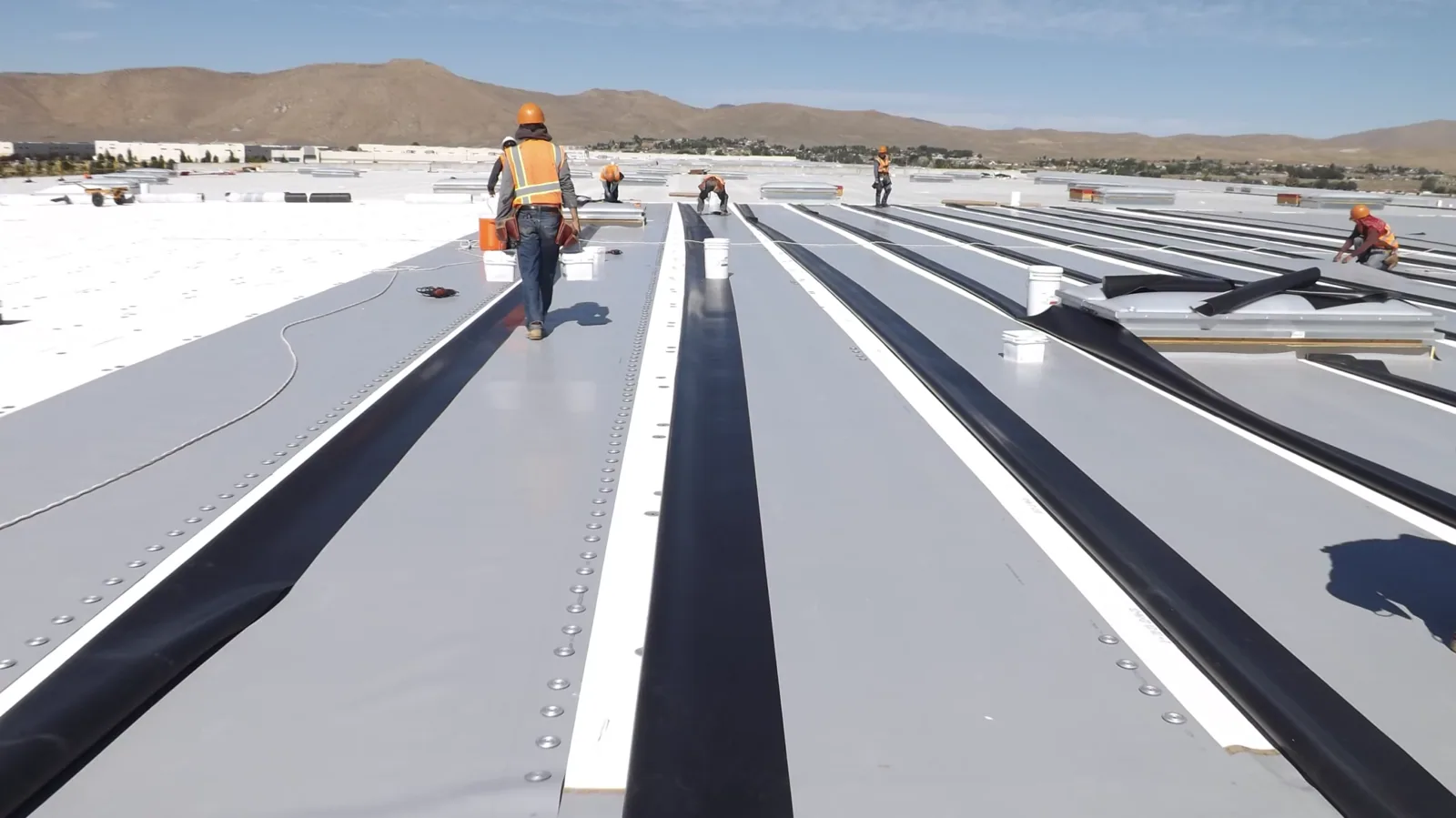
Fully adhered, mechanically attached and induction-welded methods have different substrate, fastening and seam requirements. We verify deck type, insulation layout, fastening pattern, perimeter zones and the approved design before production begins. At a parapet or curb, membrane selection must connect to compatible flashing, termination and metal. The project map marks the lift position, material drop and roof sections so the attachment crew can sequence work without crossing an active area.
For thermoplastic seams, the team prepares the sheet and welds the lap under conditions that support a sound bond, then checks completed details before cover. EPDM transitions use compatible primers, tapes or adhesives as specified. If the substrate differs from the drawing or a pull test is needed, we pause at that area and route the finding for review. The daily closeout documents completed attachment, open seams and the next inspection point.
A replacement scope can state the removal and attachment sequence. A perimeter metal review can address edge conditions.
What should a Carlisle repair include?
We identify the membrane and inspect the reported location, nearby seams, flashing, drains, curbs and prior patches. A thermoplastic opening may call for a compatible sheet patch and a welded edge. An EPDM repair requires its specified surface preparation and compatible seam materials. The written scope names the repair boundary and any field check. If a defect sits over wet insulation or unstable material, the owner receives a proposal for testing or expanded removal before the work area grows.
Accessory products and adhesives are system-specific. We use the project documents and current product instructions to select primer, cleaner, adhesive, fasteners and flashing components. The owner’s maintenance history can show whether a previous repair changed the roof detail. If the system cannot be verified, we list the information or test needed instead of assuming every black membrane is EPDM or every white membrane is TPO.
A localized repair can address a confirmed defect. A field inspection can document the roof section and adjacent conditions.
Which Lakewood conditions matter during installation?
Lakewood installation plans keep space for post-hail inspection and temperature-limited detail work. A hot membrane surface can change safe work hours and material handling; cold can affect adhesive use and cure. Hail inspection records functional damage separately from surface marks. When weather falls outside the selected product’s installation limits, the crew holds the detail and records the protection status rather than making a rushed tie-in.
An office building and parking structure at Academy Park are part of a redevelopment proposal; Colorado Mills and Denver West Village sit within the separate Denver West office-retail hub. Site access and staging differ, so we confirm delivery routes, lifts and tenant contacts at the project address. At a campus with more than one roof, each Carlisle membrane area receives a separate map and production boundary. We tie the material drop to the section being repaired, record nearby drains and transitions, then close the shift with photos of the installed detail. The facility team receives a route-status note for tenants and a separate return-inspection item for the closed section. The submittal log also identifies the approved membrane and flashing components for that roof zone. A photo log marks each completed tie-in. For work at Academy Park, the facility lead confirms the roof assembly and access plan before product selection.
What records help preserve system information?
Retain membrane and insulation submittals, fastening patterns, roof maps, photos before cover, repair logs and maintenance visits. The owner should keep any warranty certificate and confirm its conditions directly with the issuer. Our closeout can identify installed material, inspected areas, approved changes and unresolved follow-up. Later service can use the same roof-zone labels to find a seam or curb and compare current condition with earlier work.
When another product is considered for a future phase, the team should compare assembly requirements rather than brand names alone. A Johns Manville roofing system uses its own membrane and detail documentation. We map the existing Carlisle system first so the designer can specify a compatible transition between areas if the project calls for one.
Send the Lakewood roof plan, Carlisle submittals, maintenance history and access rules. We will identify the system, document conditions and outline installation or repair work by section.
Related Roofing Work
Questions About Carlisle SynTec Commercial Roofing
Which Carlisle products are used on low-slope commercial roofs?
Carlisle offers EPDM, TPO, PVC and fleece-backed product families. The roof design, deck, attachment and exposure determine which assembly is appropriate for the project.
Can you repair a Sure-Weld TPO seam?
A compatible thermoplastic repair may be possible when the surrounding sheet and weld area are sound. We inspect the lap, prepare the surface and follow the applicable system detail.
How is a Carlisle EPDM repair different?
EPDM uses compatible primers, tapes or adhesives rather than a thermoplastic heat weld. We verify the sheet and existing detail before selecting the repair material.
Does the product name confirm the roof warranty?
No. The owner’s certificate and the issuer’s current terms determine coverage. We can organize the installation and repair records for the property file.
Can one building use more than one Carlisle system?
Additions and repair phases can have different assemblies. We map each section and check transitions before specifying a repair or new work.
Talk with our Lakewood roof team
Share the Lakewood address, roof plan, Carlisle documents, repair history and operating windows. We will map the installed system, access needs and repair or replacement sequence by section.