
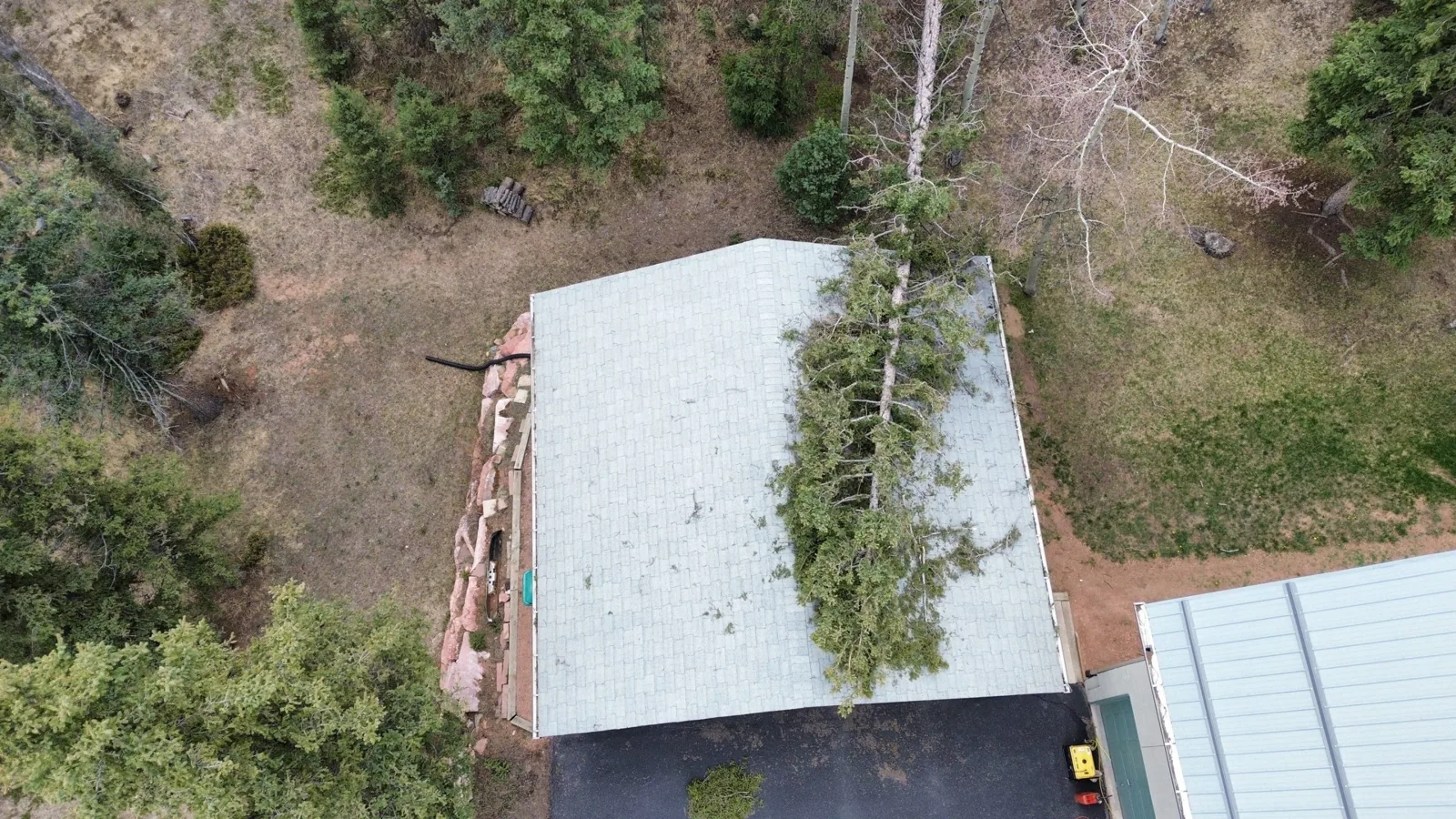
Commercial Wind Damage Roof Repair
Document and repair wind-exposed roof details
A wind report starts with the roof area that changed after the event: a lifted edge, loose flashing, open lap, displaced coping or water stain below. In Lakewood, CO, we map those observations to the building and the access route before pricing permanent work. The facility contact identifies rooms that need protection and operating windows for a roof visit. We separate visible damage from older repairs or conditions that need testing, then set a boundary for temporary stabilization and the next inspection.
Lakewood’s engineering handout distinguishes ultimate design wind speeds east and west of Kipling for Risk Category II. Those design criteria belong to project evaluation; they do not establish that a particular roof failed or confirm the wind at one address. The site assessment records the actual assembly, exposed edge conditions, attachment information available and areas not reached. A repair plan follows that evidence rather than applying a citywide value to an individual building.
What should be checked first after wind exposure?
We begin with safe access and an exterior walk for displaced edge metal, debris, loose rooftop materials, damaged gutters and interior water reports. The roof review checks perimeter corners, parapet caps, seams, fasteners, membrane transitions, curbs, penetrations and prior patch areas. We photograph the affected details and nearby reference points. A ceiling mark may be several feet from the entry path, so the inspection compares interior reports with the roof geometry above and adjacent.
If a panel or membrane edge is actively moving, a temporary restraint or weather cover may be needed before full repair can be scoped. The property contact approves access, staging and any restricted room. We do not open a second roof section until the temporary measure and tie-in at the first area are recorded. The report notes whether an assembly is visible, whether wind direction or event information was provided, and what remains uncertain.
A flashing failure review can focus on lifted transitions, while a seam inspection can document open membrane joints.
How do perimeter details affect a repair?
Roof edges carry transitions among membrane, metal, wall, coping and drainage components. Wind-related movement can loosen fasteners, open a lap or distort a termination. We check how the detail is attached and what substrate is visible before specifying a repair. A patch that restores the surface without correcting the attachment or transition may leave the same movement path in service, so the scope describes the repair layers and inspection points.
On metal systems, we look for loose panels, damaged clips, lifted seams, bent trim and water entry at penetrations. On low-slope membranes, we record separation at perimeter bars, corner details, curbs and wall flashings. The selected repair material has to be compatible with the existing assembly and installed on a properly prepared surface. Where the system is unknown, records or a test can be needed before materials are chosen.
A edge metal and coping repair can address perimeter transitions. An owner with more than one building can use a condition report to keep roof zones and repair photos distinct.
When is a patch enough, and when does the scope grow?
A localized repair may fit when movement affected a defined flashing, seam or fastener line and the surrounding assembly remains serviceable. We state the work boundary and any test needed to confirm the underlying material. If wind opened several connected details or water reached insulation and deck, a surface patch may not address the full condition. We document what is visible, pause at the authorized limit and submit additional work for review before expanding the opening.
Where attachment is uncertain across a larger area, a survey or selective opening can determine whether repairs repeat beyond the initial location. Replacement may be considered when the system is broadly compromised or a recover cannot meet drainage, attachment, height and substrate requirements. The proposal compares measured work, material compatibility, edge reconstruction, access equipment and protection below. A wind event does not by itself determine which option is appropriate; the roof findings do.
A defined repair scope can handle a limited defect. If evidence points to broader renewal, a replacement evaluation can include edge and attachment work.
What controls inspection and repair timing in Lakewood?
Lakewood identifies hail, extreme heat and extreme cold among near-term climate hazards. The weather during the event and the conditions at inspection can differ, so we record what is present during the visit. Heat can affect safe work hours and material handling; cold can limit sealant and adhesive application. Snow or ice can prevent access to a detail that needs review. If an area cannot be reached, the report states that limitation and the return condition required.
At the Denver West/Colorado Mills hub, retail and office uses share a major commercial area; a roof crew route may depend on the property’s loading and public access rules. Along the West Colfax corridor, a site contact may need to confirm parking, transit-side entry or tenant windows for the specific address. The local context helps us ask the right access questions, while each owner approves the actual route and staging position. On West Colfax, the site contact can confirm the property entrance, staging area and tenant work window before a wind-damage inspection.
What should the final wind repair record include?
The closeout identifies the roof section, observed damage, repair materials, concealed details photographed, work completed and items that remain open. If the scope changed after removal, the record ties added work to the exposed condition and owner approval. Temporary protection is listed separately from permanent repair. Follow-up inspection can check repaired edges, seams or penetrations after the assembly is safe to access and any required cure time has passed.
For an occupied building, the closeout also records the room or route returned to service, barriers removed and any tenant or facility note still outstanding. The property team can keep this file with the event report and prior maintenance records. If another storm exposes a new area, the next inspection can compare location-specific photographs without treating an earlier repair as evidence about the entire roof.
Send the Lakewood address, roof plan, event notes, interior reports and prior repair records. We will map the inspection boundary, stabilization needs and permanent work options for the affected sections.
Related Roofing Work
Questions About Commercial Wind Damage Roof Repair
Can you inspect a roof before the wind report is complete?
Yes. We can document the conditions visible during the visit and note event information still pending. The report separates observations from any conclusion that depends on additional records or testing.
What if the edge is still loose during the inspection?
We first confirm safe access and coordinate a temporary control with the property contact. The report identifies that stabilization separately from the permanent edge repair and lists any return work.
Does Lakewood’s design wind speed prove storm damage?
No. The published criteria are design inputs, not a record of wind at a particular property. We inspect the assembly and document the condition found at the address.
Can interior leaks be caused by damage away from the room?
Water may travel within a roof assembly before appearing inside. We compare the reported area with details above and nearby and identify testing needed if the source remains uncertain.
How is hidden damage handled once a repair starts?
Work pauses at the approved boundary while the exposed material is photographed and measured. We submit the added scope for authorization before proceeding into the next area.
Talk with our Lakewood roof team
Share the Lakewood property address, roof plans, event notes, leak locations and access rules. We will map observed damage, temporary protection, repair boundaries and follow-up checks by section.