
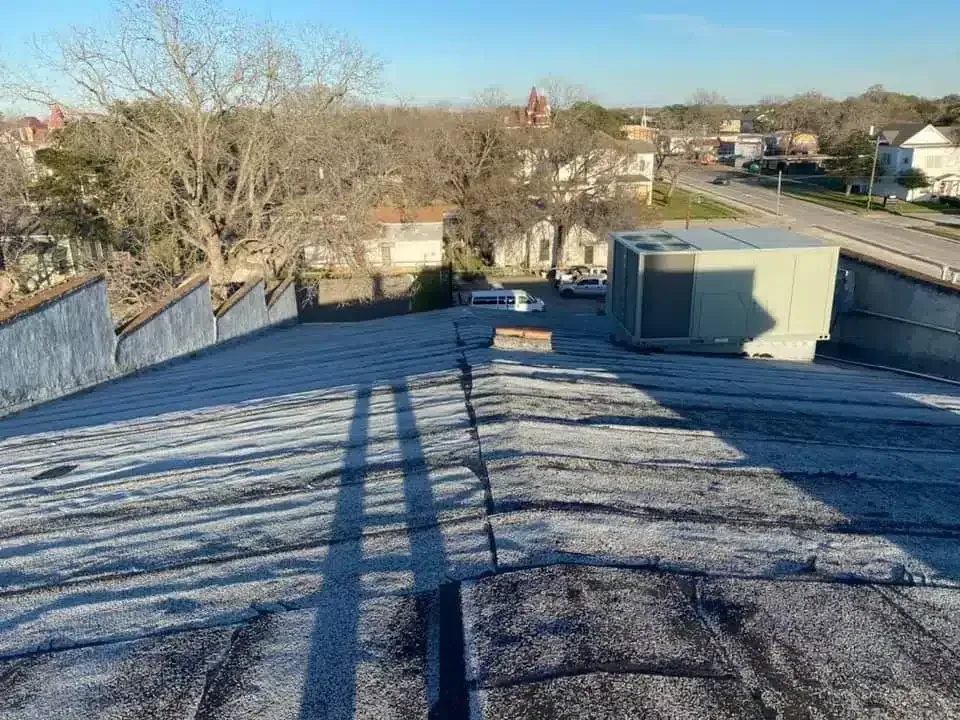
Commercial Roof Insurance and Restoration
Build a clear roof record after a storm
After a storm, the property owner needs a roof record that separates observed damage from maintenance history and questions still under review. In Lakewood, CO, we document the reported event, affected building, roof sections, visible conditions and interior locations supplied by the owner. Photos and notes identify what we could reach, what requires testing and which areas remain protected by temporary measures. That record can support the owner’s claim file and repair planning without predicting an insurer’s coverage decision.
Lakewood’s hazard study gives hail and both temperature extremes a near-term planning role. Its commercial centers include Belmar and Denver West/Colorado Mills, where retail, office, hospitality and other property uses can have different access rules. At each address, the field plan begins with the reported event, access release and roof areas the owner wants inspected. We inspect the address and tie each finding to evidence from that property.
What belongs in a storm-condition record?
We record the inspection date, reported event, weather context provided, roof access, assembly where identifiable and conditions found by section. The photo set distinguishes punctures, open seams, displaced flashing, impact marks, water entry and pre-existing patch areas where the evidence permits. Each observation has a location and next step. If a cause cannot be confirmed visually, the report says what test, opening or specialist review would help resolve it.
Claim documentation should be factual and traceable. We can provide repair descriptions, measurements, photographs and a written scope for the owner to submit through its process. The carrier and owner determine coverage, causation standards and settlement value; the contractor records observed damage, testing and repair quantities. The owner and its insurer determine which documents or inspections are required. If an adjuster or restoration contractor attends, we can coordinate roof access and identify how our observed items correspond to the roof map.
A general contractor scope record can coordinate restoration with other trades. A property manager portfolio file can keep storm observations tied to each building and tenant contact.
How do we distinguish impact from ordinary wear?
The inspection compares the reported area with seams, membrane surfaces, metal edges, penetrations, drains, curbs and earlier repair locations. A surface mark does not alone prove a functional failure. We look for evidence such as a puncture, displaced detail, open lap, broken accessory, water path or interior report that aligns with a roof condition. The record describes the observation and avoids assigning a cause that has not been established.
Weather exposure can vary across roof elevations and details. We map the affected zones and note any separate area that was not reached. Where moisture may be concealed, infrared imaging or a controlled test opening can be proposed to answer a defined question. The testing plan states access, interior protection, location and restoration. Findings from a test remain distinguished from visual observations so the owner can see which conclusions rely on each method.
A commercial roof inspection can create the condition baseline. A moisture survey may help select verification areas when the surface and weather support the scan.
What should happen before permanent repairs?
When active water is entering, temporary stabilization can reduce exposure while access, materials or weather are arranged. We coordinate the affected interior area with the property contact, then document the measure, location, installation date and permanent work still required. The owner receives a clear note that temporary protection is not the final repair. For occupied sites, we identify rooms or routes that remain restricted and what check is needed before normal use resumes.
The crew map identifies safe access, a lift position, material drop, tenant routes and the roof boundary. At Colorado Mills, public circulation and shared access shape staging; the site contact marks approved routes, delivery windows and any closures on the crew plan. At Belmar, the mixed-use setting can also involve public entries and adjacent tenants. We confirm the address-specific delivery and work windows before mobilizing.
An emergency roof response can address active entry. At the Denver West / Colorado Mills hub, plan crew access around retail circulation and office loading; the facility contact confirms each route.
How is a repair estimate separated from a claim decision?
The repair scope lists the roof section, observed defect, proposed correction, material detail, access needs and any test or owner decision that could change quantity. Where a storm-damaged detail connects to deteriorated adjacent material, we identify both conditions separately. If removal exposes wet insulation or damaged deck, work stops at the approved boundary until the owner reviews the added condition and schedule effect. The revised estimate identifies the measured area and any unresolved allowance.
Some repairs may be localized; broader moisture, deck damage or attachment concerns can lead to a replacement evaluation. Before quoting an overlay, we verify moisture, attachment, drain flow, roof-edge clearance and equipment access; otherwise, removal remains an option to evaluate. We show repair, recover and removal as distinct options when field findings support comparison. The price is tied to defined scope and cost drivers, not to a claim outcome.
A hail damage assessment can document event-related conditions. A replacement estimate can define broader work when localized repair is not supported by the survey.
What Lakewood weather conditions affect the follow-up?
The municipal climate assessment flags hail and temperature extremes in its near-term risk outlook. Lakewood’s design basis assigns 30 psf to ground snow and sets the roof snow/live-load minimum at 30 psf; the designer checks those values against the project documents. The project engineer determines building-specific application. Those values do not rate the capacity of an existing building. Ice may conceal a damaged detail or prevent safe access; a hot roof or very cold conditions may also defer inspection or application until the task can proceed safely. The report notes weather or access limits so an owner can distinguish unfinished inspection from a clear finding.
After hail, we compare roof evidence with reported interior conditions and record each area that needs monitoring or testing. If temporary protection was installed before a later inspection, the record identifies it so covered details are not described as visible. A return visit can verify the permanent repair after safe access and required cure time. The owner can keep photos, work approvals and follow-up findings together for the property record.
A wind condition review can be used when the reported event includes a separate wind concern, with observations kept distinct by roof section.
Related Roofing Work
Questions About Commercial Roof Insurance and Restoration
Can your inspection decide whether insurance covers the roof?
No. We document roof conditions and prepare a repair scope; the insurer and owner determine coverage under the applicable policy and claim process.
Can an adjuster attend the roof inspection?
The owner can coordinate a joint visit. We can identify access requirements, roof sections and the observations recorded in our report, while each party maintains its own evaluation.
What if the storm date is uncertain?
We record the date and event information supplied by the owner and distinguish it from what we observe onsite. The inspection can document current conditions without assigning an unsupported event date.
Does a temporary patch complete the restoration?
Temporary stabilization controls an immediate condition while permanent work is arranged. We document its location, protection status and return scope so it is not confused with a completed repair.
Can you price repairs before opening wet areas?
We can price visible work and identify the assumptions that depend on concealed conditions. If removal reveals a different assembly, we document the added area and request authorization before expanding the work.
Talk with our Lakewood roof team
Send the Lakewood property address, reported event details, roof plans, interior locations, prior repair records and access rules. We will document observed conditions, testing needs, stabilization and repair options by roof section.