
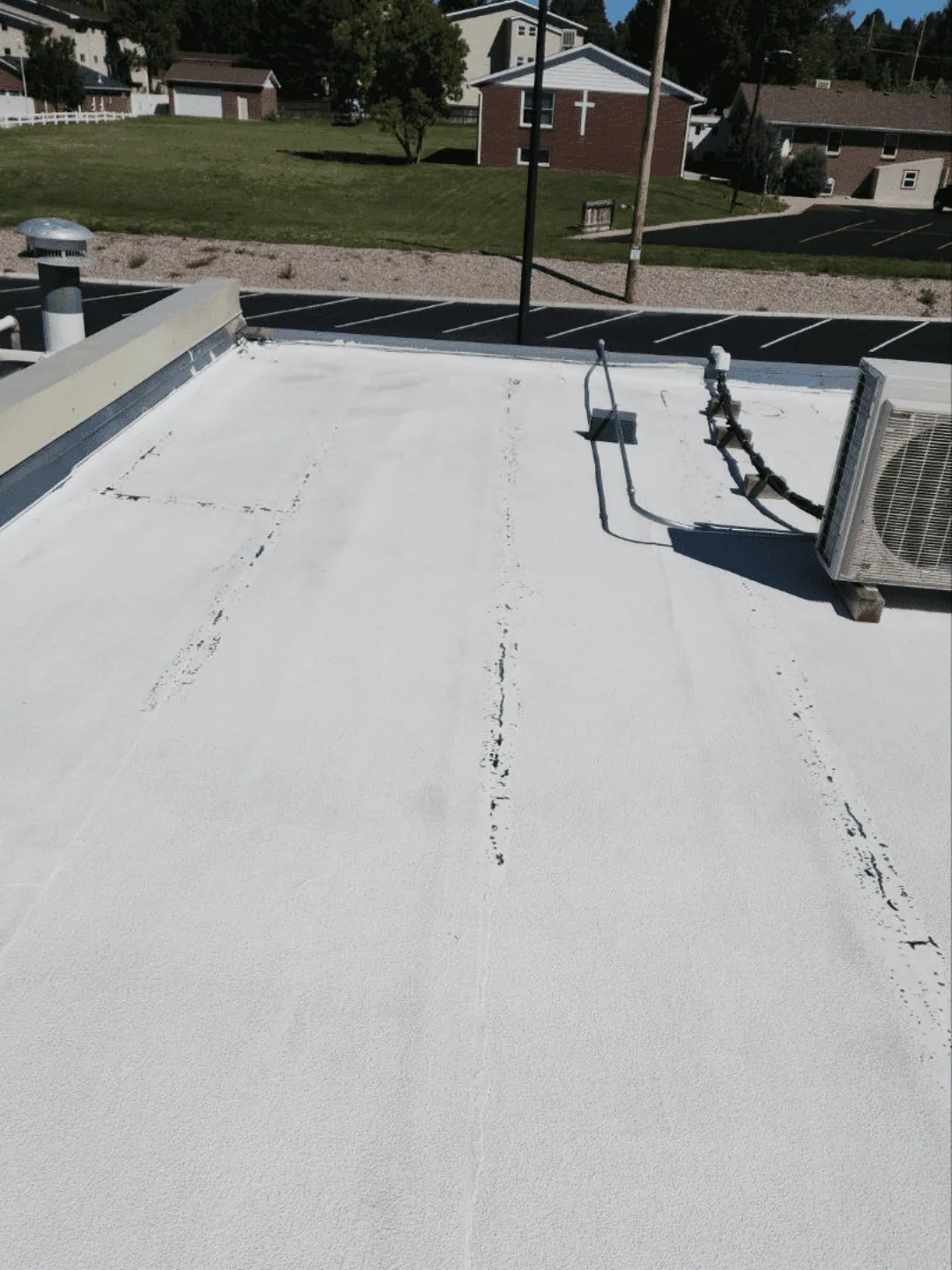
Commercial Storm Damage Roof Repair
Coordinate a Lakewood Storm Roof Review
After a storm, the first task is to separate active water entry from roof conditions that need review but can wait for a safe inspection. For a Lakewood, CO commercial building, we confirm the affected section, interior impact, access route and weather before setting the response sequence. Hail, high wind, heavy snow and temperature changes can leave different signs, so the report records observed damage by detail and roof area. Emergency protection, inspection and permanent repair remain distinct steps with separate boundaries.
Retail property near Denver West and Colorado Mills can have customer routes and deliveries that affect lift position. The West Colfax corridor has a different mix of commercial activity and access needs. We confirm site operations at the address, then map where the crew can inspect and where materials may be staged.
Which conditions need immediate protection?
Active dripping, exposed deck, a displaced edge, a loose panel or water near electrical equipment deserves prompt attention. The building contact should keep people away from unsafe rooms and follow the property’s emergency procedures. We review the roof route, surface condition and weather before climbing. If access is unsafe, the crew explains what interior protection can be arranged and when a roof assessment may proceed.
Lakewood faces hail risk, along with hot summers and cold winters. A report after hail may include surface marks, punctures, displaced metal, damaged accessories or no visible roof defect at all. We photograph each observed condition and distinguish direct damage from aging or a prior repair. A emergency response can stabilize active water entry, while a leak investigation traces the path to a confirmed or suspected entry point.
How is the affected area mapped?
We identify the building, roof section, system, slope or drainage area, and the detail where a condition appears. A roof plan or marked aerial image can show the location of hail impacts, lifted edges, open seams, punctures, damaged flashing and drain issues. Interior reports are connected to those roof observations when the path can be traced. The survey also records inaccessible areas, obstructions and any part of the building that was outside the approved visit.
Images need context. A surface mark may be hail-related, prior wear or a repair, and a wet ceiling may have more than one possible route. We note what supports the finding and where another test is required. A full condition inspection can cover sections beyond the reported damage, and overhead imagery may help organize a broad roof before hands-on verification. We do not assign a cause solely from a remote photograph.
What repair sequence follows the inspection?
First we address openings or loose components that could worsen under current conditions, using a temporary measure when a permanent repair cannot be installed safely. The written scope then identifies substrate preparation, compatible materials, replacement of damaged components, flashing details and any insulation or deck work. If concealed damage appears after an opening, the crew photographs and measures the added area and requests approval before continuing.
Storm work may cross several systems or building sections. On an existing metal roof, a wind-damaged panel edge may need different work from a membrane puncture or failed curb flashing. Drainage concerns require their own evaluation. Drain and scupper repairs can address discharge details, and perimeter metal service can follow damaged edges. If hail findings affect multiple sections, a hail damage assessment can provide a focused damage map.
How will the work fit the property schedule?
The property contact identifies tenant hours, emergency access, loading restrictions, rooftop equipment that must remain online and any escort or key requirements. We map a crew route, staging zone and material drop that keep fire access and occupied areas clear. If several roofs share one site, each section receives its own start and closeout point so temporary protection is not confused with permanent completion.
At the Rooney Valley employment area, commercial and light-industrial uses can have delivery or process windows. Lakewood’s published design handout specifies a 30 psf minimum roof snow/live load; that criterion does not show the capacity or condition of a specific storm-affected roof. If impact, movement or deflection raises a structural question, we keep the area clear and refer the evaluation to the appropriate professional. Work resumes only when access and conditions support the planned method.
What records support repair and claim decisions?
The closeout includes the inspection date, reported event, roof locations reached, photos, observed conditions, emergency measures, permanent work and open recommendations. It separates direct observation from suspected cause and identifies any untested area. If the owner needs documentation for an insurance file, we can organize the roof findings and repair scope, while coverage, causation and claim decisions remain with the insurer and policy process.
Use consistent building and section names across photos, estimates and work orders. A claim documentation scope can assemble the repair records, and condition reports can support broader asset review. The owner should retain the pre-repair images and any temporary-protection notes alongside the final invoice and post-work photographs.
What happens after the repair is complete?
We verify the repaired detail, photograph the finished work and identify any roof area that still needs monitoring or replacement planning. The closeout names exclusions, remaining tests and a recommended follow-up trigger, such as a later inspection after weather changes. A repair is not described as complete if a temporary cover remains or if an adjacent finding was never included.
Send the property list, event date, interior reports, roof plans, access rules and available prior service records. We will define the immediate response, mapped inspection and repair scope in sequence. If the findings show broader deterioration, the owner receives a separate comparison for maintenance, coating, recover or replacement rather than an emergency work order that quietly expands.
Related Roofing Work
Questions About Commercial Storm Damage Roof Repair
Can you confirm hail caused every mark on the roof?
We document visible conditions and explain what supports a storm-related finding. Some marks need closer examination, and the report distinguishes observed damage from wear or a cause that remains uncertain.
Will the emergency visit also inspect the entire roof?
The initial response focuses on safety and active damage. A full condition review is a separate scope unless the owner authorizes broader inspection and sufficient time and access are available.
What if the roof is unsafe to access after the storm?
We do not proceed through an unsafe route. The contact receives the access limitation, interim interior-protection steps where appropriate and the next conditions needed for a roof visit.
Can repair begin before an insurance decision?
Urgent measures may be needed to protect the building. We document the observed condition and authorized work, and the owner coordinates coverage and claim decisions with the insurer.
How are concealed storm conditions handled?
The crew records the opened area and newly visible condition, then requests approval for additional work. The estimate and closeout keep the original scope separate from any change.
Talk with our Lakewood roof team
Share the property address, reported event, active leaks and roof access contact. We will plan safe inspection, immediate protection and documented follow-up by section.