
Commercial Roof Flashing Failure Repair
Trace the flashing path and define the repair
A flashing leak can begin at a wall, curb, pipe or roof edge while the interior stain appears somewhere else. For Lakewood, CO buildings, we compare the reported location with the transition details above and nearby, then document the likely entry path before opening the assembly. The survey identifies the existing membrane or metal, flashing material, termination and prior repair layers where visible. That record helps separate a failed detail from water that traveled beneath an otherwise intact surface.
Lakewood’s near-term hazards include hail, extreme heat and extreme cold. A flashing survey checks exposed caps, wall transitions and curb details after impact, then sets the repair boundary from roof evidence. Freeze and thaw also affect material transitions, so the crew checks current surface conditions before preparing a detail.
Which transitions should be traced around the leak?
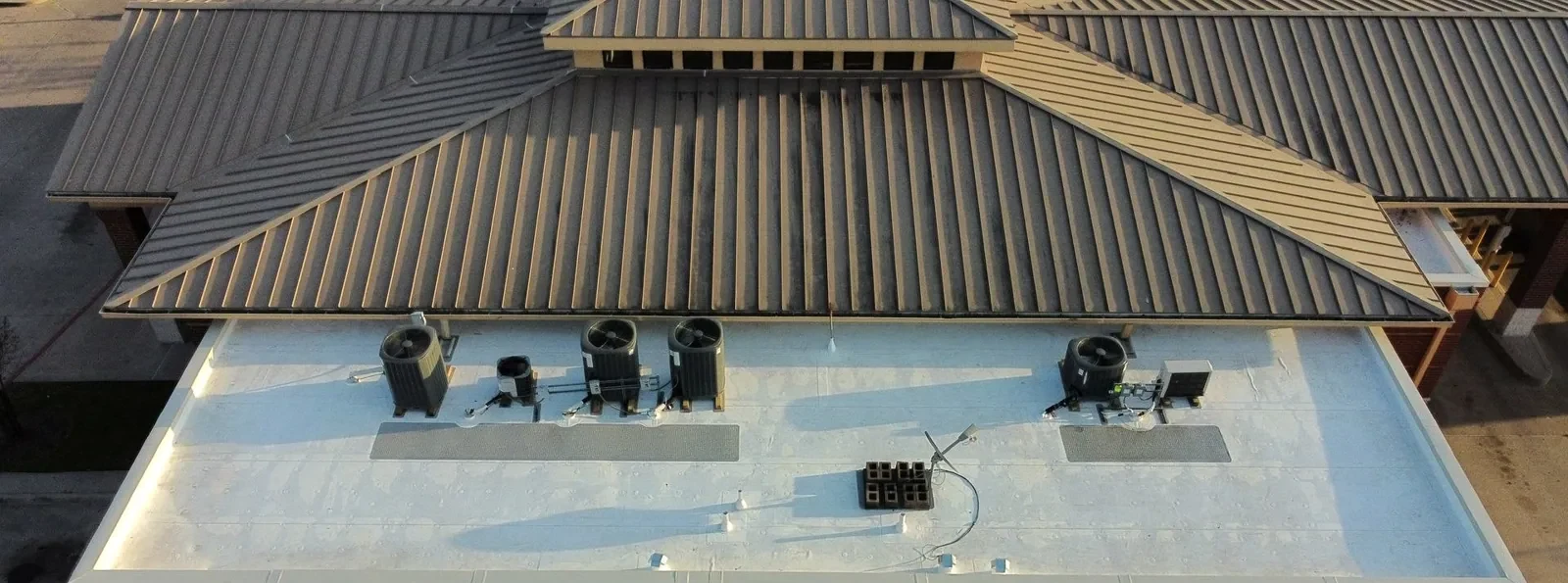
We inspect wall flashings, parapet terminations, curbs, pitch pockets, pipe boots, skylights, expansion joints, drains and equipment supports. The review checks adhesion, laps, counterflashing, sealant condition, metal movement, termination bars and the tie-in to the field membrane. We note whether the defect is open, cracked, loose, punctured or simply aged, then photograph it with nearby landmarks so a return crew can find the same detail.
Inside, the facility contact can identify when water appeared, whether the leak recurs during wind-driven rain or snowmelt, and which room or equipment is affected. That pattern helps direct inspection but does not prove causation. We trace the roof assembly from the reported point toward adjacent details and mark any section not reached. Where the flashing is buried or concealed, a test opening can be proposed with a clear restoration detail and interior protection plan.
A penetration and skylight flashing scope can focus on penetrations. If wind lifted a termination, a wind-related roof inspection can document related movement.
How does the existing roof system affect detail repair?
Repair material must bond or fasten compatibly with the installed assembly and the surface needs proper preparation. A membrane patch at a pipe, metal counterflashing at a masonry wall or liquid-applied detail each addresses a different transition. The scope identifies the product type, laps, sealant or reinforcement where needed, and the conditions required for installation. If the existing system is unknown, we review records or test a representative area before committing to a repair material.
A temporary bead over a loose or wet detail can hide the opening without restoring the transition. We remove failed material as authorized, expose enough of the interface to inspect it and install the specified repair to a sound surface. If corrosion, rotten substrate or moisture extends beyond the intended boundary, work stops for documentation and approval. The property team receives the proposed added area and any access or schedule effect before the crew proceeds.
A coping and edge-metal correction can resolve a perimeter interface. A seam failure assessment can separate field-joint problems from flashing issues.
What should a flashing repair estimate include?
The estimate names each detail, roof zone, visible defect, repair length or count, access equipment, material, preparation and protection below. It distinguishes a confirmed quantity from a concealed condition that needs an opening. For multiple penetrations, we list locations individually when their construction differs. That lets an owner approve the observed work without treating every curb or pipe on the roof as identical.
Cost and timing depend on the number and height of transitions, removal of prior repairs, substrate condition, system compatibility, access, weather and occupied-space controls. A small detail can take longer when equipment or tenant routes restrict the work window. We state the cure or inspection hold that must pass before the area returns to normal service. If an assembly requires a design or manufacturer review, that dependency appears before mobilization.
A leak tracing and repair visit can address active water entry. If defects recur across sections, the owner may compare a broader renewal scope after the condition is mapped.
How do Lakewood access conditions affect the work?
Denver West and Colorado Mills form a regional office and retail hub; Belmar is a mixed-use downtown center. At either kind of property, access may involve tenants, deliveries, public routes, equipment service or shared parking. We confirm the actual site’s approved entrance, lift position and work window with the owner. The map keeps each transition tied to its roof section and shows the crew route to reach it without assuming that a lot or lane is available.
Cold can restrict sealant and adhesive work, while heat affects safe roof hours and material handling. Snow or ice can block a parapet edge or curb from safe inspection. A weather hold is recorded by task, and the report identifies when a return visit can complete the detail review. At a Downtown Lakewood and Belmar property, the owner’s approved entrance and tenant route still control how flashing crews reach each roof section.
How will the repaired detail be checked?
Before cover, we photograph the prepared transition, underlying condition if exposed, and materials installed. Closeout lists the roof zone, work boundary, approved changes, cure or inspection hold and any limitation that remains. The property contact receives the area returned to service and a note for any follow-up observation. If a leak recurs, those records help compare the repaired detail with the next reported path.
Where flashing connects to a larger assembly, the repair should not conceal an unresolved seam, drain or attachment concern. We list separate findings for owner review, rather than including undefined work under one line item. The final record can be attached to the roof map and service history so later maintenance checks the same termination and sealant transition.
Send the Lakewood building address, roof plan, leak history, photographs and access rules. We will inspect the transitions and return a detail-specific repair scope with conditions that remain to be verified.
Related Roofing Work
Questions About Commercial Roof Flashing Failure Repair
Can flashing be repaired without replacing the roof?
Often a defined detail can be repaired when the surrounding roof is sound and the materials are compatible. We inspect the adjacent assembly and identify any condition that would change the boundary.
Why is the leak showing far from the flashing?
Water can move along a deck, seam or insulation layer before entering the room. We compare interior evidence with roof details above and nearby and identify tests needed if the path remains uncertain.
Can you seal over the old flashing?
We first check adhesion, moisture, surface preparation and material compatibility. A new layer over loose or wet material may not correct the underlying opening, so the scope states what must be removed.
What if a curb repair exposes rust or wet insulation?
We stop at the approved line, photograph and measure the exposed condition, and request direction for added work. The proposal explains any revised protection and schedule.
How do cold conditions affect flashing work?
Temperature can limit sealant or adhesive installation and cure. We follow the product requirements and record a hold when the conditions at the roof do not support the specified detail.
Talk with our Lakewood roof team
Share the Lakewood address, roof plan, interior leak locations, prior repairs and access limits. We will map affected transitions, verify material compatibility and price the repair boundary by roof section.