
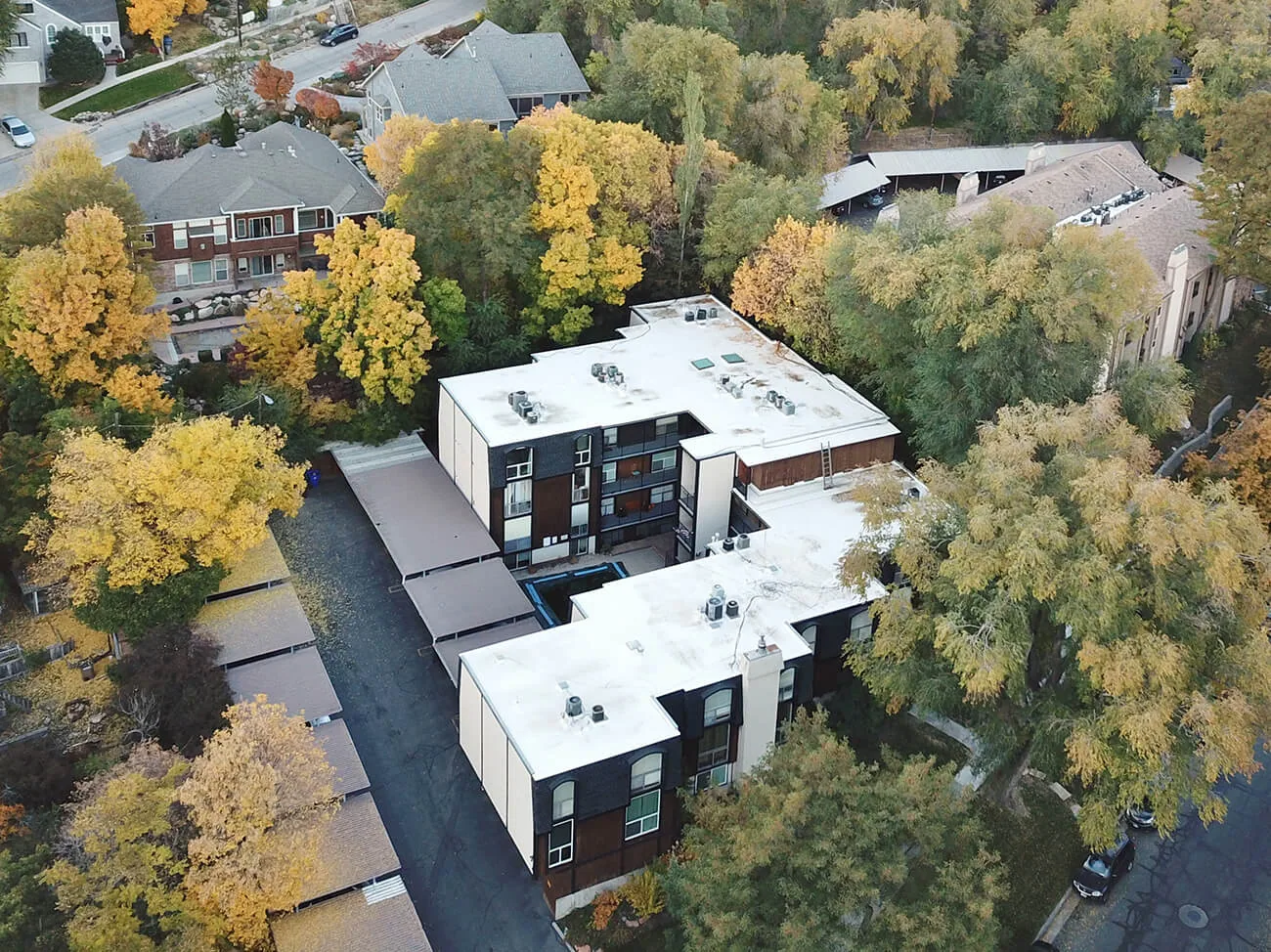
Apartment Roofing
Map apartment roof work to resident access
Resident notices and parking determine how a roofing crew reaches an apartment building without changing a daily routine more than the work requires. In Lakewood, CO, we map entrances, accessible paths, roof hatches, balconies, drains and the units below proposed work areas. Each leak report is tied to a roof location, and each phase receives an access route, protection boundary and closeout point. The property manager can review that sequence before selecting repair or replacement.
Downtown Lakewood and Belmar combine housing with government, retail, jobs and entertainment. Downtown Lakewood’s planned mixed-use activity includes housing alongside government, retail, jobs and entertainment. We verify each apartment property’s circulation and shared parking with management. We confirm the building layout, tenant rules and roof assembly onsite.
How should residents be notified before roof work?
The manager supplies quiet hours, delivery rules, parking limits, accessible routes and any unit-access process. We use that information to identify where a lift or material drop can fit and whether a temporary route is needed below. Notices should state which building or entrance is affected, the likely time window and where residents can direct a question. The crew follows the route approved by management and keeps fire access clear.
Roof sections are mapped against occupied units, common rooms, laundry areas, garages and equipment rooms. Where interior protection is required, the property identifies the room and contact before work begins. The phase ends at a defined stop line with edges and penetrations protected against weather. If concealed moisture forces a larger opening, the crew pauses while the owner reviews added protection and tenant communication.
Downtown Lakewood and Belmar combines housing with government, retail, jobs and entertainment. A hotel roof plan shares occupied-building logistics but follows guest turnover rather than resident notices.
What roof and interior details are recorded?
We inspect membrane seams, penetrations, drains, scuppers, parapets, edge metal, skylights and transitions between roof levels. Balconies, deck edges and rooftop equipment may create flashing or drainage details that need separate photographs. We note ponding evidence, open laps, loose fasteners and past patches, then tie each finding to a roof plan. Interior stains are mapped by unit or common area when the manager can provide access.
Water may travel through insulation or along a deck before it shows on a ceiling, so the reported room alone does not define the repair. We compare roof details above and around the location and identify where a test opening can confirm moisture. Available drawings and repair history help establish membrane, deck and attachment, but areas without evidence are marked for verification. The report separates immediate leak work from maintenance and capital questions.
A roof condition inspection can organize findings by building. If several units report water entry, a moisture survey may help select test areas when the assembly and scan conditions are suitable.
How are occupied units kept apart from open roof areas?
Before removal, the manager identifies residents, staff and common spaces below the planned phase. We agree on interior notices, temporary coverings and the process for responding if water is found. Material staging and debris removal follow a route that does not cross tenant spaces or accessible entries. Work stops at the boundary where the crew can seal the roof and secure the site within the planned shift.
Balcony doors, rooftop patios or shared amenities may need temporary restrictions if work or overhead handling crosses their area. The management team approves those limits and any alternate access. We photograph concealed flashing before cover and note the condition left at closeout. If removal uncovers a weak deck or saturated insulation, the next phase waits for a reviewed price and protection plan.
A senior-living roof phase also requires resident access planning, with its own staff and care routines. Each property receives a separate notice and protection map rather than a generic occupied-building schedule.
When should an apartment owner repair or reroof?
Localized repair can work when damage is limited to a seam, penetration or drain detail and nearby layers remain serviceable. We trace water entry and list the repaired detail, the extent of any wet material and what remains under observation. Multiple leak locations, repeated patch failures or widespread moisture can justify a test opening or replacement review. The record gives the property a boundary for each choice.
A recover may be considered when the existing roof is dry, stable, compatible and able to support a new layer. Added thickness must preserve parapet transitions, drains, roof hatches and access around mechanical equipment. Tear-off may be necessary when insulation is wet, deck condition is poor or the assembly cannot accept secure attachment. The proposal describes work by building or roof section and includes tenant protection, access equipment, debris handling and the number of phases management can release.
A recover assessment can check the existing base; a replacement plan can map removal and new installation. Cost depends on verified area, layer count, insulation and deck work, edge details, rooftop equipment and resident access constraints.
Which Lakewood weather factors belong in a resident notice?
Lakewood’s design table uses 30 psf for ground snow and a 30 psf minimum for roof snow or live loading. The building’s design documents determine the project requirements. Snow and ice can restrict safe roof access or keep drains and balcony-edge details from being inspected. We set a weather hold and confirm that completed work remains protected before the property reopens affected routes.
For Lakewood apartments, roof planning should account for hail, summer heat and winter cold. After a hail report, we document punctures, opened seams, loose edge details and surface marks separately. Heat can affect worker exposure and some application methods; cold can limit cure or adhesion. The sequence follows actual conditions and product instructions. If a weather delay changes the crew route, the manager receives the revised access window before work resumes.
A maintenance visit can check drains and flashing between capital projects. A snow and ice review can document areas that were inaccessible during winter conditions.
Related Roofing Work
Questions About Apartment Roofing
Can residents stay in their apartments during a reroof?
The phase plan identifies units below active work, interior protection and any temporary route change. Management reviews those limits before mobilization, and each shift closes the roof section to the approved boundary.
How far ahead should residents be notified?
The property sets its notice policy. We provide the building, access point, work window and expected restrictions early enough for management to issue its communication and route plan.
What if a leak appears in a unit after the roof is closed?
Management can report the room and timing, and we compare that location with the completed roof area and nearby details. The closeout record helps determine whether a follow-up inspection or separate repair is needed.
Can roof replacement be divided by building?
Yes, when each building has a sound boundary, independent access and a closeout point that protects the occupied areas below. We map each phase and its resident notice separately.
What information helps estimate apartment roof work?
Building plans, prior repairs, leak locations, resident access rules, parking limits and equipment service routes help set the survey. Field checks establish the roof layers and quantities that records do not confirm.
Talk with our Lakewood roof team
Send Lakewood building plans, roof drawings, parking limits, resident notice rules, leak reports and equipment routes. We will map inspection zones and phased repair or replacement options.