
Commercial Snow and Ice Roof Damage Repair
Inspect winter damage when the roof is safe to reach
A roof inspection after snow or ice begins with the route, not a shovel. In Lakewood, CO, we confirm that the property has released safe access and that the roof surface can be reached without creating a new hazard. The visit maps snow-covered areas, blocked drains, ice at edges, reported leaks and any visible damage. If loading or structural performance is a concern, that question goes to a qualified design professional; a roofing walk does not calculate capacity.
National Weather Service records estimate 65 to 70 inches of seasonal snowfall for western and southwestern Denver suburbs. Lakewood’s winter criteria pair a 1°F design temperature and a 532 air-freezing index with 30 psf values for both ground snow and minimum roof snow/live load. These regional conditions make winter access and thaw inspections relevant to the maintenance plan, but they do not tell us how much snow is on a particular roof or what load it can support today.
When is the roof safe to inspect?
The owner’s facility contact identifies roof access, fall protection, ladders or hatches, restricted areas and any structural hold. Snow depth, drift, ice, wind, visibility and surface condition affect whether a route can be used. The superintendent starts the roof walk only after snow, ice and the access route have been cleared for safe entry. If inspection must wait, the report records the area not reached, the reason and the condition needed for a return visit.
From approved access, we check drains, scuppers, gutters, downspouts, parapets, roof edges and places where snow or ice is accumulating. We photograph surface movement, displaced metal, membrane tears, open seams and water entry where visible. A ceiling stain after a thaw is compared with nearby details above; meltwater may travel beneath the assembly. The first inspection may identify a location for follow-up testing rather than the final source.
A drain and scupper inspection can focus on outlet restrictions. If snowmelt is collecting in a low area, a ponding water assessment can trace the roof’s drainage path.
How can thaw expose a leak path?
Snowmelt can move toward a low point, blocked outlet or seam that was hidden while the roof was covered. Water entering at a parapet, curb or penetration may travel before it appears inside. We inspect the likely route after conditions allow access and compare the location with the roof map, prior repair records and interior reports. The report distinguishes what was visible during the snowy visit from details inspected later.
Ice along a roof edge can reflect meltwater that refreezes at a colder termination, but it can also accompany a blocked drain or airflow condition. We identify the observed location and refer insulation, ventilation or structural questions to the appropriate building professional when they fall outside the roof repair scope. A roofing repair should correct a confirmed opening or drainage detail, not cover an unresolved cause with sealant.
A flashing evaluation can review a wall or edge transition. An interior leak trace can compare the room report with roof details once the route is available.
Which repairs may be needed after a winter event?
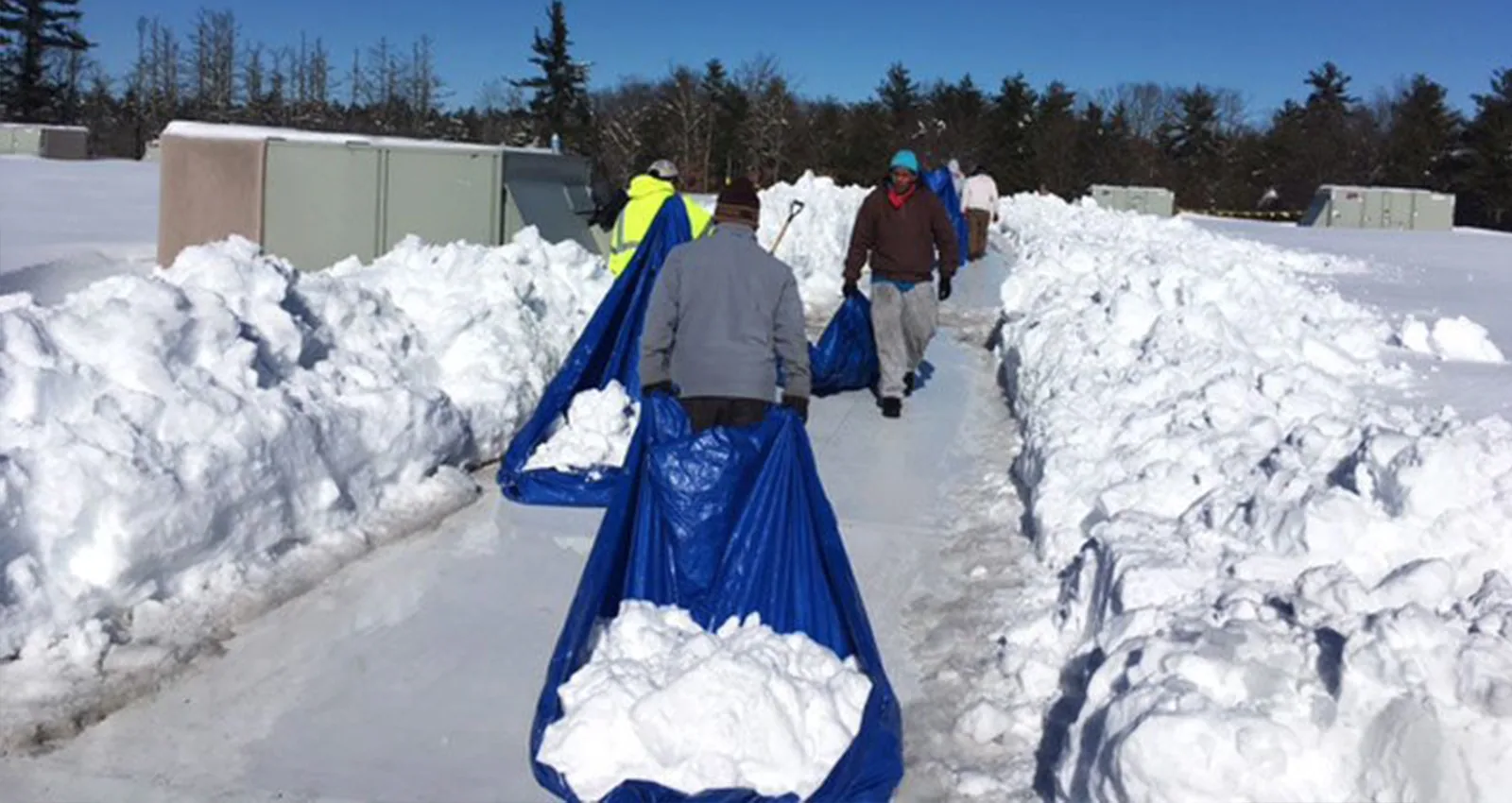
Repairs can include clearing an authorized outlet, correcting a damaged drain or scupper, restoring a displaced edge, sealing a confirmed seam opening or replacing a punctured area. We inspect adjacent materials and attachment before setting the patch boundary. If snow removal or ice control is part of the owner’s plan, it must follow the building’s approved method; an unplanned tool or chemical can damage a membrane or finish.
Wet insulation or damaged deck may require selective removal after the owner approves protection and testing. The crew photographs the exposed layer, records its dimensions and stops at the approved line if the condition grows. Replacement can be compared where moisture or repeated failures extend beyond one detail. An overlay is considered only after the existing assembly, drainage, attachment and height are checked. The estimate separates roof repair from any structural or snow-removal service assigned to others.
An emergency repair visit can stabilize active water entry. If wind has also disturbed an edge, a wind damage inspection can document that condition separately.
What Lakewood winter criteria should owners keep in view?
Those winter design conditions guide freeze-thaw detailing and safe access planning. Its snow criteria include 30 psf for ground and a 30 psf minimum for roof snow or live load. These are published design inputs, not a current snow measurement or a structural rating for a specific property. The building’s engineer applies the project criteria and evaluates any capacity concern using its plans and condition.
West and southwest Denver suburbs receive meaningful seasonal snowfall, and thaw can expose details that were inaccessible under snow. At the Federal Center and Union Boulevard hub, federal employment, medical offices and the St. Anthony campus represent different operating schedules; a roof visit must follow the actual building’s access authority. At a Federal Center / Union Boulevard facility, confirm escorts and agency entry permissions before roof inspection.
What should the winter closeout record say?
The report lists the date, access condition, roof zones viewed, areas covered by snow or ice, findings, temporary protection and work still pending. After thaw, a return visit can use the same map to inspect drains, seams, edges and any earlier water entry. We note whether the repair was permanent or interim, and what observation confirms the detail is ready for normal service.
If the inspection could not reach a section, the closeout does not treat it as clear. The owner receives the route or surface condition required before a follow-up. Photos show the weather condition and any roof detail that was visible, which helps distinguish a seasonal access limit from a completed check. The record remains useful for facilities, maintenance and any professional reviewing a structural question.
Send the Lakewood roof plan, snow or ice observations, leak locations and access instructions. We will identify areas we can inspect safely, document the findings and list the next step for blocked or damaged details.
Related Roofing Work
Questions About Commercial Snow and Ice Roof Damage Repair
Should someone shovel the roof before your visit?
We first coordinate with the owner about safe access and its snow-management plan. Roof clearing should follow the building’s approved method and the proper professional direction where load or structural concerns exist.
Can you tell whether a roof is overloaded from a visual inspection?
No. We document visible roof conditions and access limits. A qualified structural professional evaluates building-specific capacity and loading.
Why does a leak appear after snow begins to melt?
Meltwater can reach a seam, drain or flashing detail that was covered during the snowfall. We inspect the path once access is safe and compare the interior report with roof conditions above and nearby.
Can ice dams be fixed with a roof patch?
A patch addresses a confirmed opening, not every cause of ice at an edge. We document the roof detail and refer insulation or ventilation questions to the appropriate building professional.
What if the roof is still covered at the end of the storm?
We list covered zones as not inspected and define the conditions for a safe return. The owner receives findings only for areas the crew could reach and assess.
Talk with our Lakewood roof team
Share the Lakewood property address, roof plan, snow observations, interior reports and access controls. We will document visible damage, drainage concerns and any structural question requiring a separate review.