
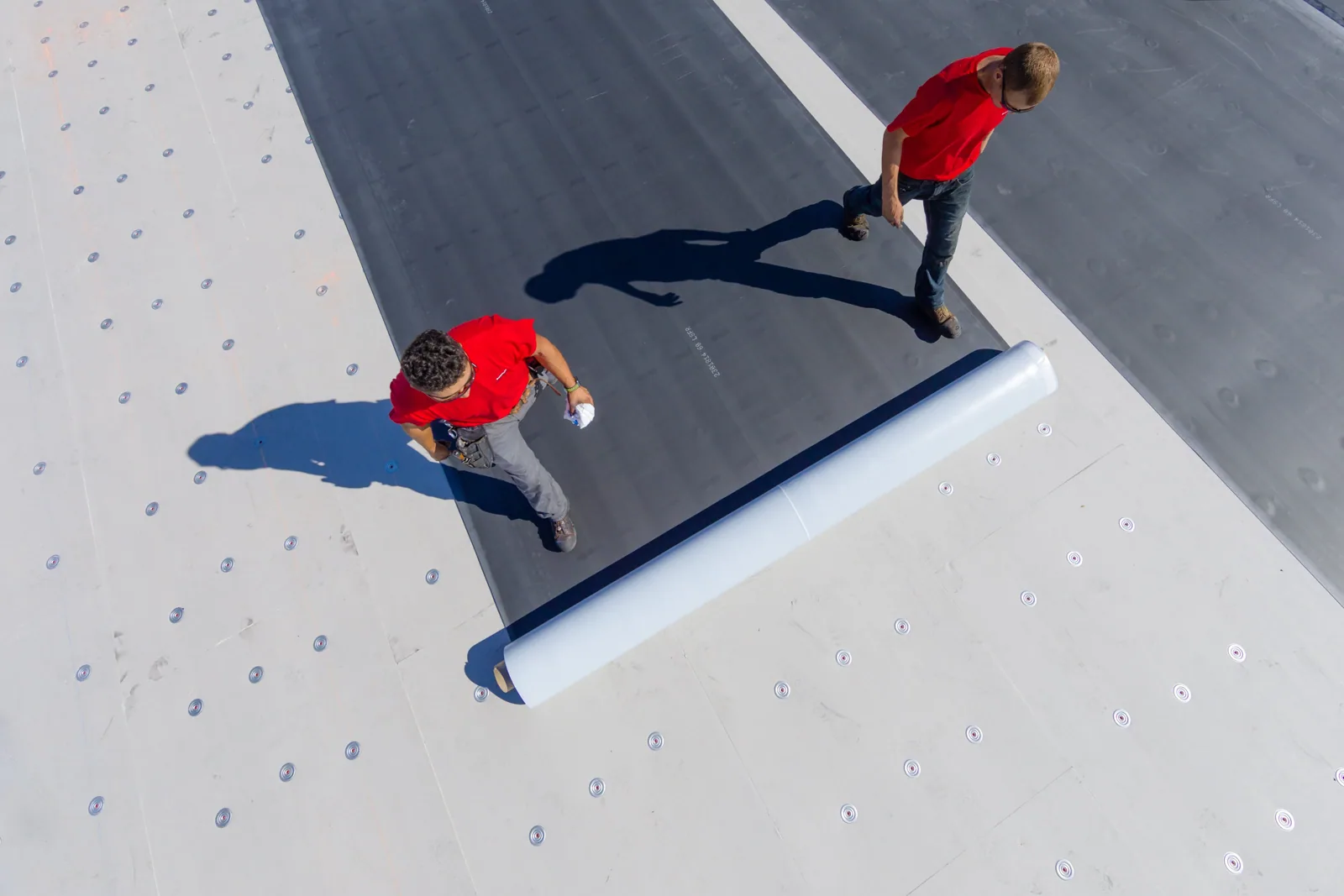
Holcim Elevate Commercial Roofing
Verify the Holcim Elevate roof before setting a repair
A Lakewood facility with Holcim Elevate roof records needs the system name matched to the area being repaired or replaced. We identify whether the documents call for UltraPly TPO, RubberGard EPDM or another Holcim Elevate assembly, then verify visible membrane, seams, edge conditions and roof accessories onsite. The survey notes which areas are accessible and where additions or prior repairs may use a different construction. That gives the project team a basis for comparing the specified assembly with actual field conditions.
Lakewood’s commercial hubs include Union Square, Federal Center, Denver West and Rooney Valley. A roof at an office campus, medical property or light-industrial building can have a different equipment layout and work window. At each Lakewood property, the facility contact confirms the roof access route, operating controls and areas available for inspection.
How do UltraPly TPO and RubberGard EPDM differ?
UltraPly TPO is a thermoplastic membrane family for low-slope commercial and industrial roofs. Its seams are heat welded, and the specified assembly may use adhered, mechanically attached or other approved attachment details. RubberGard EPDM is a flexible synthetic rubber sheet with its own seam, flashing and attachment methods. The materials are not interchangeable, so we confirm the installed membrane before preparing a patch or selecting accessories.
Each system must be designed as an assembly: deck, vapor control, insulation, cover board, membrane, attachment, perimeter details and penetrations work together. We compare the roof plan with field evidence and identify any missing submittals. If one building contains several phases, the scope maps separate zones and transitions before materials are staged. The designer’s project documents and current Holcim Elevate installation requirements guide the selection.
A TPO membrane system uses welded thermoplastic seams; an EPDM assembly follows different joining details. For a second product reference, GAF commercial systems also include TPO and PVC membranes, with its own approved attachment and flashing details. The brand name alone does not set an assembly; we compare the written specification, tested components and building conditions before proposing a change. Carlisle SynTec offers a useful comparison for teams reviewing multiple bids, but each manufacturer’s details must stay with its own system.
What should the existing assembly inspection cover?
We inspect field seams, wall and curb flashing, pipe penetrations, drains, scuppers, terminations, edge metal and walkway areas. The property team can mark rooms with reported leaks, equipment that needs continuous service and areas with recurring foot traffic. We compare those points with roof details above and adjacent. The report identifies visible defects separately from suspected moisture or attachment concerns that need a scan, test opening or design review.
For UltraPly TPO, the inspection can include seam condition and patches at penetrations. For EPDM, we review tape or adhesive seams, flashing transitions and prior repair materials. The product family matters when identifying compatible accessories. If a roof section cannot be safely reached due to snow, locked access or equipment, the report names the coverage gap and what must happen before a return visit.
A roof condition survey can establish the baseline. A moisture scan may narrow test locations when conditions support that method.
What controls a Holcim Elevate replacement sequence?
Before removal, we confirm deck condition, fastening or adhesive requirements, insulation layout, edge zones, penetrations and temporary protection. The facility contact approves the lift, material drop, service route and rooms below the work area. The phase map identifies which section can be opened, dried in and closed within the day. A daily closeout records completed laps and flashing, the temporary tie-in and any inspection hold before the next zone begins.
For an occupied property, we coordinate tenant windows, equipment access and interior protection with the owner. If a concealed condition changes the planned section, the crew stops at the authorized limit, documents the exposed layer and submits a change for approval. Weather holds are recorded against the specific adhesive, weld or detail task, not left as an unexplained calendar delay.
A phased occupied-building sequence can track room access and roof boundaries. A replacement proposal can itemize layers and work zones.
How do Lakewood conditions affect repair work?
Lakewood’s near-term hazard list includes hail, severe heat and severe cold. Hail can puncture a membrane or disturb flashing; the inspection separates those defects from marks that do not show a functional opening. Heat affects crew exposure and handling, while low temperatures can limit adhesive application and cure. We check conditions against the selected product instructions and leave a task on hold if preparation or bond requirements cannot be met.
The local load baseline pairs 30 psf ground snow with a 30 psf minimum roof snow/live-load value. A structural designer checks capacity for the specific assembly. Snow or ice can keep a crew from reaching a seam or drain, and the report records any area that remains unseen. Near Denver West Village and Federal Center, access contacts may set different tenant and delivery rules. At Denver West Village, confirm the tenant window, delivery route and lift position before opening a roof section.
What records support the next service visit?
Keep the submittal package, roof map, installation photos, repair work orders and maintenance notes with the property record. Closeout should identify the product family, roof zone, materials installed, inspections performed and items left open. The owner retains any warranty certificate and verifies its terms with the issuer. A manufacturer name in a maintenance file does not by itself confirm which building areas are covered.
When an inspector returns, the same roof-section labels help compare seam, flashing and drain conditions with earlier photos. If a unit or walkway changed, the map should show the updated route and any new interface. A repair estimate can then state whether it addresses the same detail or a separate condition. The record supports planning; the field survey still determines the current scope.
Send the Lakewood roof plans, Holcim Elevate product documents, equipment schedule, prior repairs and access rules. We will verify the assembly and return a section-based installation or repair plan with testing and approval needs stated.
Related Roofing Work
Questions About Holcim Elevate Commercial Roofing
Does Holcim Elevate offer both TPO and EPDM roofing?
Holcim Elevate’s commercial product information includes UltraPly TPO and RubberGard EPDM. The project documents and building conditions determine which system is selected.
Can UltraPly TPO be installed over a current roof?
A recover needs a field check of moisture, existing attachment, substrate, drainage and added height. We list any test or design decision needed before pricing an overlay as a confirmed option.
Can RubberGard EPDM be repaired with TPO materials?
No. The membrane families use different seam and flashing methods. We identify the installed sheet and select repair materials specified for that system.
What if the roof contains both TPO and EPDM areas?
We map each assembly separately and inspect its transition. Each section receives its own material list, repair boundary and closeout record.
How do you handle weather during a membrane installation?
The crew checks surface and air conditions against the product requirements. If a weld, adhesive or detail cannot be installed as specified, we secure the section and record the return task.
Talk with our Lakewood roof team
Share the Lakewood address, roof plans, UltraPly or RubberGard documents from Holcim Elevate, repair history and access schedule. We will identify the installed assembly and map the work sequence by zone.