
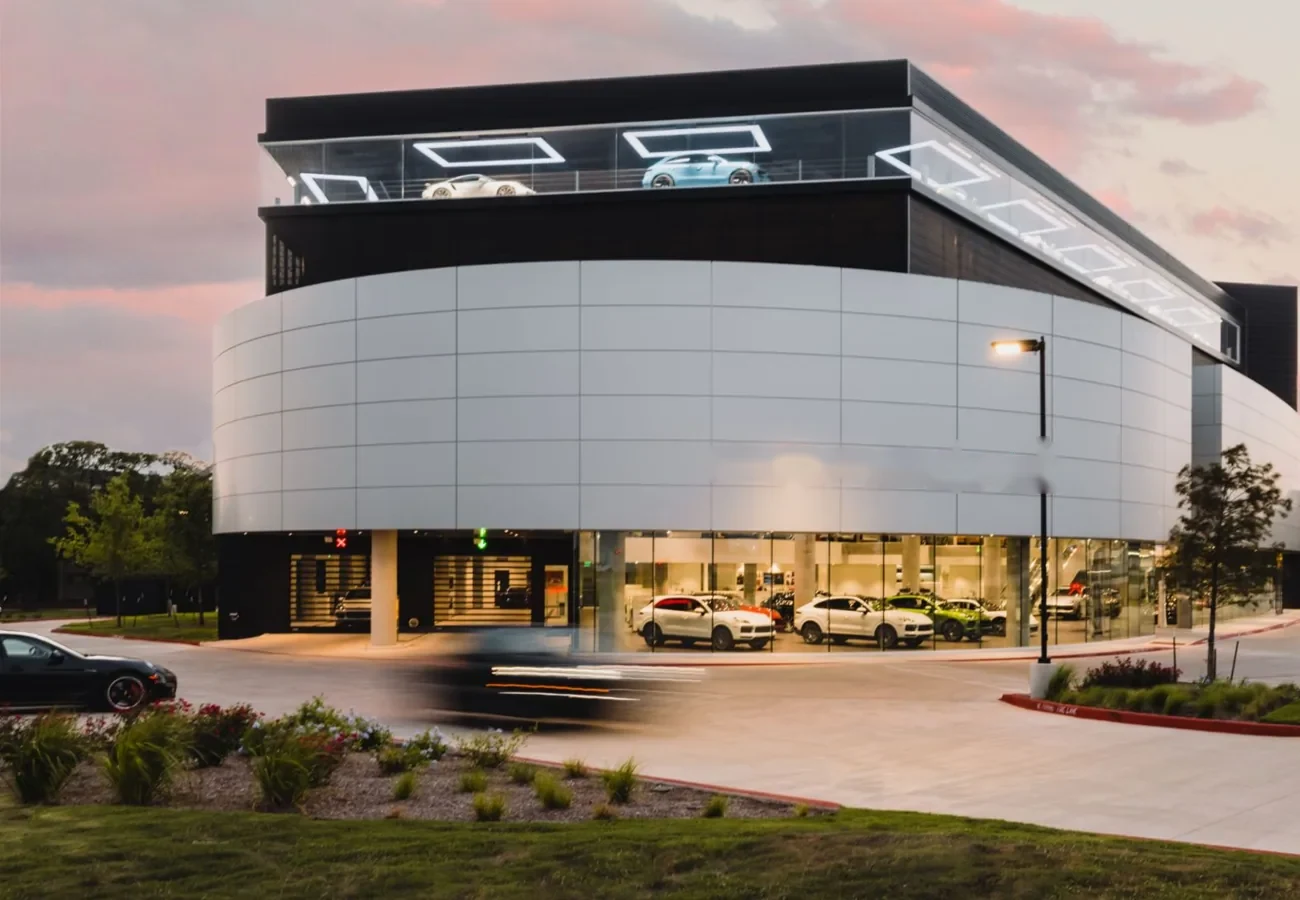
Auto Dealership Roofing
Keep dealership movement in the roof plan
A dealership uses its property in several ways at once: customers arrive at the showroom, vehicles move through service lanes, and deliveries may use a separate drive. In Lakewood, CO, we map those routes against roof access, rooftop units, drains and the section scheduled for work. The survey records visible conditions and interior reports by building area, then sets a phase that keeps the approved customer and service routes clear.
Jewell-Wadsworth, Denver West and Rooney Valley are distinct Lakewood commercial centers. Rooney Valley includes regional retail, restaurants, offices and services. Before staging, the facility team maps its showroom, service-bay and delivery routes.
How can vehicle movement stay separate from roofing?
We identify showroom doors, service-bay entrances, vehicle delivery points, fire lanes, customer parking and any covered drop-off. The property approves a lift position and material drop that do not cross those routes, or reserves a window when traffic is lighter. Work below overhead handling receives a marked exclusion zone, with a separate pedestrian path where needed. The crew’s material and debris routes use the service access approved by management.
The roof sequence can divide the building by structural bay or service area, provided each section has a durable tie-in. We note equipment that remains operational and preserve technician access to units and exhausts. The phase plan identifies noise periods, interior protection, weather cover and daily closeout. If deck damage or moisture extends the opening, work stops while the owner reviews vehicle relocation, protection and cost for the added area.
A facility near the Jewell and Wadsworth commercial hub still needs property-specific confirmation of circulation and loading. A shopping-center roof scope may coordinate customer routes across several tenants; the dealership plan also accounts for vehicles moving between showroom and service.
Which dealership roof details need location tags?
We record seams, penetrations, drains, skylights, curbs, rooftop equipment, parapets, canopy transitions and edge metal. Service areas may have more exhaust or mechanical penetrations than sales areas, so the roof map distinguishes those zones without assuming the same assembly across the entire property. Inspection notes include open laps, punctures, corrosion, ponding evidence, loose flashing and prior repairs. Photos show the roof feature and its location relative to the building plan.
Interior reports may come from a showroom ceiling, a parts area or a service bay. We compare the report with roof conditions above and around it, recognizing that water can travel along structure or insulation. Drawings and repair records help identify membrane, deck and attachment. If a layer cannot be confirmed, the scope names a test opening or other verification before removal quantities are priced.
A roof inspection can provide a condition baseline. A drainage check can identify outlet conditions that need cleaning or repair before a snowmelt period.
How do you protect vehicles and interior work areas?
The dealership identifies where vehicles may park beneath roof work and which interior rooms need protection or notice. The roof boundary is kept above the area that can be secured at the shift endpoint. Tools and packaging are restrained against wind, and loose debris is removed before the customer route reopens. If a service bay must remain accessible, the material drop and crew path are planned away from the overhead door.
Equipment curbs and exhaust transitions are photographed before work covers them. Any unit shutdown or relocation is coordinated with the dealership’s equipment contact. If removal exposes moisture or deteriorated deck, the crew stops at the agreed limit and management reviews the added protection and cost. The daily closeout states which bay or showroom section remains restricted and what work is set for the next shift.
A flex-industrial roof plan can address adjacent shop and office areas. A warehouse roof inspection may share material handling concerns but does not replace the dealership’s vehicle and customer route map.
How should the owner compare repair and replacement?
Repair fits a localized seam, flashing, curb or drain issue when the surrounding roof remains sound. We trace water entry, state the boundary and list nearby conditions that need monitoring. If leaks recur across both sales and service areas or wet insulation is suspected, a test opening can show whether the problem extends beyond the visible defect. The owner can then compare a repair with a broader phase based on verified conditions.
A recover may be considered when existing layers are dry, stable, compatible and capable of taking the new system. Added height needs review at canopies, parapets, roof hatches, drains and equipment curbs. Tear-off can be necessary if the deck is damaged, insulation is wet or secure attachment cannot be verified. A proposal separates removal, insulation, flashing, edge details, equipment transitions, vehicle protection and access equipment.
A recover review can evaluate an added assembly. A replacement estimate can establish phasing by building area. Price depends on measured roof area, existing layers, deck and insulation, equipment quantity, lift access and the customer windows available for the work.
Which Lakewood weather conditions affect dealership access?
Lakewood’s ground snow load is 30 psf, with a 30 psf minimum roof snow/live load. The dealership’s project documents establish how the design criteria apply to that building. Snow or ice can make roof access unsafe and affect the ground areas used for a lift. We check conditions before bringing crews to the roof, and set a hold if the route or work surface cannot be used safely.
Hail, extreme heat and extreme cold are among Lakewood’s near-term climate hazards. The storm walk records impact marks, punctures, open seams and displaced flashing by roof area. A surface dent alone does not prove that water entered the assembly. Heat can affect worker exposure and material handling; cold may limit installation and cure. The work sequence follows actual weather and manufacturer instructions, with a change notice if a delivery window moves.
A hail condition review can document impacts after a storm. A maintenance inspection can revisit seams and drains between capital projects.
Related Roofing Work
Questions About Auto Dealership Roofing
Can the showroom remain open during roof work?
Management approves customer routes, noise limits and any entrance changes. We stage the work area outside those boundaries and close each roof phase before the affected customer route returns to normal use.
Can service bays continue taking vehicles?
We map delivery, lift placement and overhead work so the property can identify which doors remain available. Any temporary restriction is agreed before mobilization, with another roof phase selected if a bay cannot be isolated safely.
How do you protect vehicles parked below a roof opening?
The property identifies parking areas beneath the work, and we use the approved exclusion zone or vehicle relocation plan. Openings remain within a boundary that can be protected and secured by closeout.
Does a damaged canopy require replacing the whole dealership roof?
No single detail determines the full scope. We inspect the canopy connection, adjacent membrane and drainage, then separate a localized repair from roof-wide conditions that need testing.
What records should be ready before the survey?
Roof plans, service-bay hours, delivery windows, prior repairs, leak locations and rooftop equipment schedules help set the inspection route. We verify dimensions and assembly details onsite.
Talk with our Lakewood roof team
Send roof drawings, showroom and service hours, vehicle routes, equipment schedules, access rules and repair history. We will map the inspection and phase options for review.