
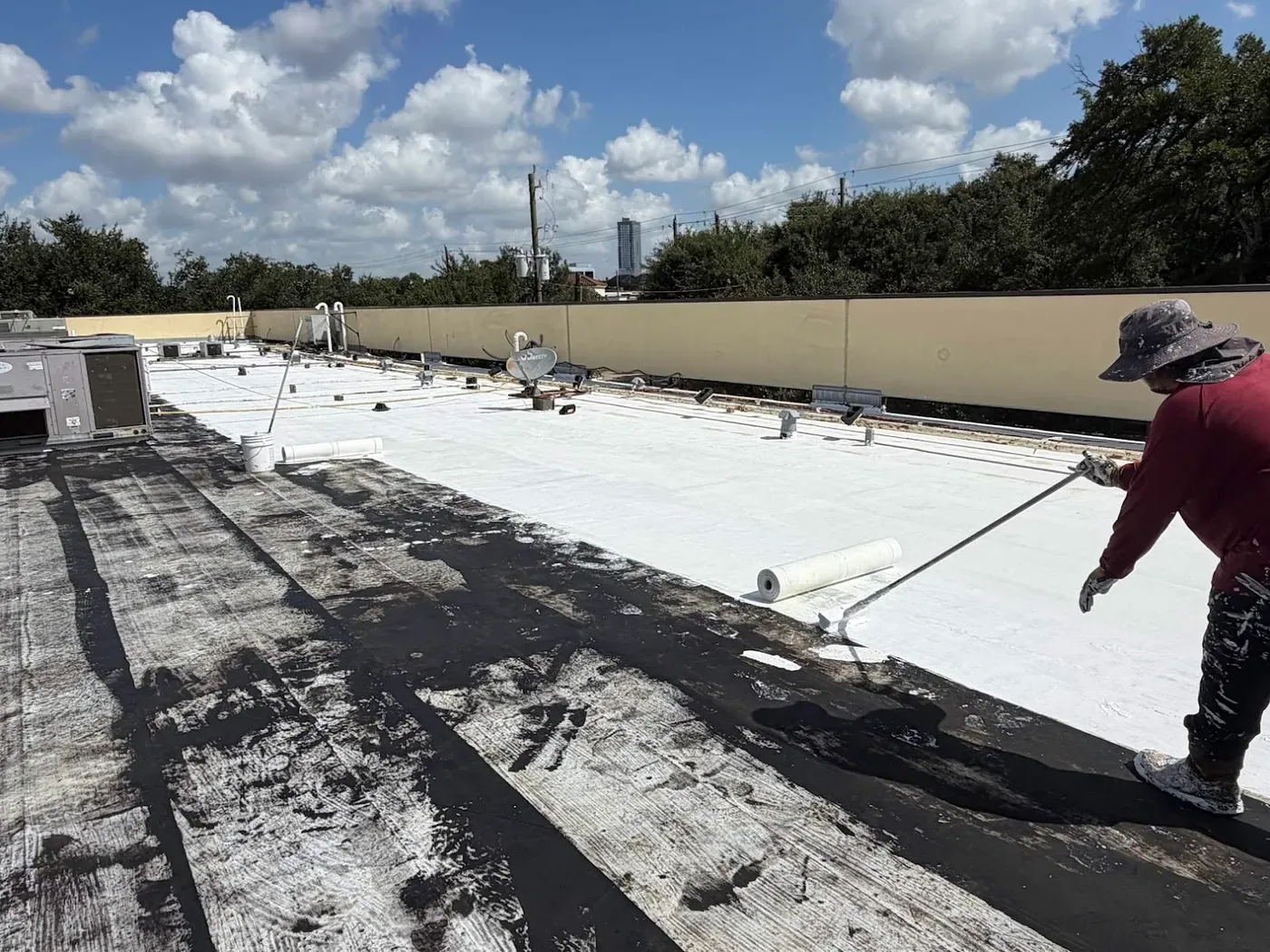
Silicone Roof Coatings
Review a Lakewood Silicone Coating Scope
A silicone coating is a restoration option only when the roof below it can support a new layer. For a Lakewood, CO property, we identify the existing membrane or metal, map ponding and prior patches, and verify whether the surface can be cleaned and prepared for adhesion. The proposal separates coating coverage from seam, penetration, edge and insulation repairs. If testing finds wet materials or weak attachment, the owner receives a different scope before the surface is covered.
Along Mississippi Avenue, commercial buildings can have varied operating hours and loading needs. The Denver West and Colorado Mills area includes regional retail and office uses. We confirm each property’s access route and staging zone before delivery.
What conditions make a roof eligible for silicone?
The field review identifies membrane condition, existing coating, adhesion, moisture, slope, drain performance, edge terminations, penetrations and areas with repeated repairs. Representative adhesion tests can check bond to the prepared substrate. Test openings may be needed where wet insulation or multiple layers are suspected. The map distinguishes confirmed eligible roof from areas needing repair, removal or additional testing.
Silicone products can tolerate standing water under some specifications, but persistent ponding still needs to be measured and reviewed with the selected product requirements. A coating does not correct deflection, a blocked drain or a low area that needs tapered insulation. A roof condition inspection can document visible conditions, while drainage work can address an outlet, scupper or slope issue before coating.
How do cleaning and repair affect adhesion?
Preparation removes dirt, loose coating and contaminants that can prevent bond. The method must clean the roof without damaging the membrane or dislodging surface aggregate. Open seams, failed flashing, corrosion and punctures receive compatible repairs before field coating. The work plan protects drains, HVAC intakes, skylights and property below from cleaning residue or overspray. We identify any surface that cannot be prepared within the approved method.
Hail, extreme heat and cold are near-term Lakewood hazards. A hail review checks coating cuts or exposed substrate, while temperature and moisture affect the application window. We compare the forecast and surface readings with the product instructions, then set daily stopping points. Coating restoration work can include testing and prep; targeted repairs should be priced separately when the substrate needs more than a surface layer.
How does silicone compare with other coating systems?
Selection depends on substrate, water exposure, surface preparation, desired finish, application conditions and future maintenance. Silicone and acrylic systems have different performance profiles and should be compared against the building’s drainage and use. Product data defines primer, coverage, reinforcement and cure requirements. The estimate identifies the system rather than calling every liquid-applied restoration “coating,” and notes where a transition needs another material.
We check the coating’s wet-film application limits, cure sequence, reinforcing materials and compatibility with previously installed products. A color sample or test patch can verify appearance and bond over a defined location before broader application. That approval does not replace field preparation or inspection; it documents a material choice for a particular surface condition.
Acrylic coating may fit certain slopes and drainage patterns, while SPF restoration involves a foam substrate and protective layer. Existing product layers must be identified before a new coating is specified. If the assembly is not suitable for another coating, a membrane replacement may provide a clearer scope than retaining a failing substrate.
How is the roof divided for application?
The map marks coating sections, drains, roof edges, curbs, expansion joints and equipment. We coordinate material drop, lift position, crew route, tenant window and any shutdown needed to protect air intakes. Preparation and coating follow the product’s sequence, with each section tested or checked at the required stage. The crew does not move to an adjoining area until the prior boundary can be closed or protected.
During the initial pass, the crew marks drains and sensitive equipment for protection and confirms where coating stops at parapets and existing metal. The supervisor checks the day’s work against the product coverage rate and notes any area where surface irregularity changes material use. If the approved section cannot cure before weather arrives, it is not carried into the next phase without a recorded boundary and inspection.
Lakewood’s business centers include office, retail, government and medical uses. A property contact identifies entrances and loading areas that must remain in service, and we schedule surface preparation and spraying around those periods. Wind can change overspray controls and temperature can affect cure; the supervisor records any deferred area and revised access window. A phased plan lets the asset manager see which roof sections are complete and where tenant notice still applies.
What belongs in a coating estimate?
The estimate lists measured area, cleaning, adhesion tests, primer, coating layers, reinforcement, detail work, access equipment and protection. It identifies repairs completed before coating, areas excluded pending testing and any allowance for concealed moisture. If an opening shows wet insulation, that area is separated from the eligible coating quantity. Owner approval is requested before a repair boundary expands.
Lakewood sets a 30 psf floor for roof snow/live loading. The engineer evaluates building capacity and added material weight. A project engineer reviews building-specific capacity and any added material load. The project designer reviews building-specific loads and any added materials. Capital planning can compare a tested coating scope with replacement timing across properties, once the owner has section-level conditions.
What should the owner receive after application?
Closeout records preparation, primer and coating product, coverage sections, application conditions, detail reinforcement, photos, exclusions and follow-up requirements. The roof map marks drains, curbs, transitions and any surface that needs future observation. The service file retains the product instructions and maintenance limits so later repairs use compatible materials.
The owner should retain a map of test patches and repaired defects, because those locations can behave differently from the original field coating. Later service should identify the product and surface preparation before using a new sealant or coating. A maintenance route can note areas beneath equipment, at drain sumps and beside expansion joints for closer review after seasonal weather.
Share roof plans, leak reports, prior coating records, access rules and the owner’s decision deadline. We will inspect the surface, check eligibility and define the repair and coating boundary before material is ordered. The final report distinguishes applied coating from open repairs or test areas that remain under review.
Related Roofing Work
Questions About Silicone Roof Coatings
Can silicone be applied over any existing roof coating?
The underlying material must be identified, cleaned and tested for compatibility and adhesion. The scope names any primer, preparation or removal needed before applying the new layer.
Does silicone fix standing water?
Some products tolerate ponding under their stated conditions, but coating does not correct low slope, deflection or a blocked outlet. We map those conditions and price drainage work separately.
Can the roof stay in service during coating?
The property can remain occupied when the route, protection and tenant windows are planned. Surface preparation, odors, overspray and air-intake locations may require specific controls.
What happens if adhesion testing fails?
The affected area is excluded until the substrate or preparation method is reviewed. We document the result and compare removal, repair or another system before proceeding.
How are penetrations protected?
Curbs, pipes and roof edges receive details compatible with the selected coating. We include the location and reinforcing work in the field map and final closeout.
Talk with our Lakewood roof team
Send roof plans, prior coating records, leak history, access rules and equipment locations. We will test suitability, map repairs and define the coating sequence by section.