
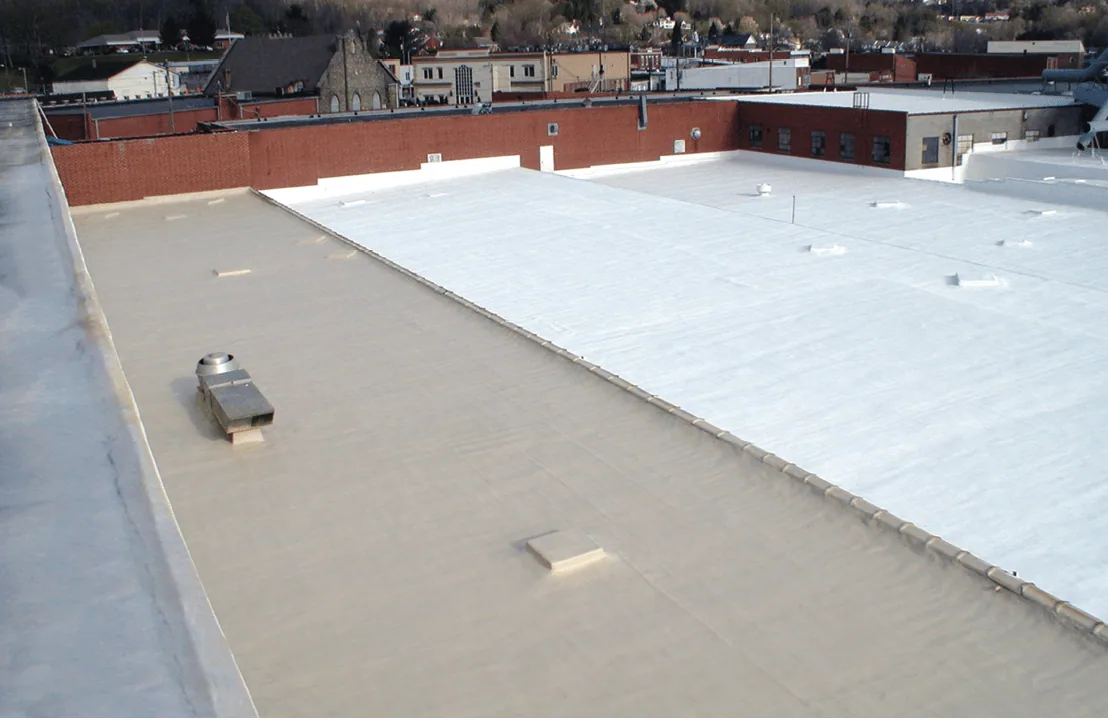
Spray Polyurethane Foam Roofing
Review an SPF Roof in Lakewood
A spray-foam roof has a shaped insulation layer beneath a protective coating, so damage to the surface can expose the foam to weather. For a Lakewood, CO facility, we inspect the coating, foam profile, adhesion, penetrations, drains and prior repairs before defining work. The scope maps thin or damaged areas separately from sound roof sections. It also notes whether new foam, coating restoration or broader replacement is being considered, with quantities tied to field observations.
The Mission Trace / Academy Park Growth Area includes planned storage, retail and service uses on South Wadsworth Boulevard. The Bend at Sixth Avenue and Union Boulevard is another Lakewood redevelopment area. Each actual roof needs its own condition survey, service route and staging plan.
What indicates the foam or coating needs attention?
We check for coating erosion, exposed foam, cracks, blisters, punctures, loose repairs, ponding and separation at penetrations or edges. The technician records thickness changes, drainage paths and any area where foot traffic has worn the surface. Core cuts or other openings may be needed to confirm moisture or the assembly below. A visible coating defect does not by itself identify the condition of foam beneath it.
We also inspect penetrations, curb transitions and repaired spots that may hold water at their edges. Foam profile can vary between original application and later repairs, so a broad roof view is not enough to price replacement. We mark each test or repair point on the plan and note whether the foam was verified, screened or not opened. That gives the owner a measured basis to set the next inspection or removal scope.
Hail, severe heat and severe cold rank among Lakewood’s near-term hazards. Hail review should document coating impact and exposed foam, while temperature changes affect the application window for repair material. A roof condition review can map the visible surface, and a moisture survey can help select verification points when concealed wet areas are suspected. The report distinguishes screening results from confirmed material condition.
How is an SPF repair rebuilt?
Preparation removes loose coating and damaged foam to reach a sound boundary. New foam is applied in controlled lifts where the assembly requires replacement, then shaped to restore the intended slope and surface. The protective coating is installed at the specified coverage and reinforced at seams, curbs and penetrations as required by the system. We identify cure time and weather conditions before reopening the roof to foot traffic or equipment service.
Where only the coating is worn and the foam remains sound, a coating restoration may fit after adhesion and moisture checks. A broader tear-off could be appropriate if foam is wet or poorly attached across several sections. Drainage correction can address an outlet or low-area concern; adding coating alone does not reshape a roof to fix a persistent pond.
Which protective coating is part of the SPF assembly?
The coating protects foam from ultraviolet exposure and weather, so the material and thickness must match the foam system and project requirements. Silicone and acrylic products have different properties and limits, and one is not a universal substitute for the other. We check substrate condition, moisture, slope, ponding, existing coating and the manufacturer’s preparation and application instructions before specifying a recoat.
Silicone coating systems and acrylic coatings can be compared against the roof’s drainage and service conditions. If the existing foam assembly has reached a broader renewal point, a single-ply replacement system may be compared with repair or recoat. The proposal identifies field area, repairs, reinforcing fabric, penetrations and edge details separately.
How are overspray and rooftop operations controlled?
Spray application requires protection for nearby equipment, vehicles, air intakes, walls, entrances and property lines. The site plan marks the spray zone, wind limits, masking, staging area and approved crew route. The property contact confirms occupied hours, rooftop units that draw outside air and any area that cannot be exposed to overspray. If wind shifts beyond the approved conditions, application stops and the crew secures materials.
Before mobilization, the crew identifies wind monitoring, masking removal, equipment covers and the route for empty containers. The contact confirms when HVAC intakes may be isolated or protected and who can restore the units after the spray window. If a section cannot be completed under the planned conditions, a written boundary tells facility staff which zone remains open to inspection and which areas are ready for normal access.
At an office or retail redevelopment, trucks, deliveries and pedestrian paths can cross the work boundary. The facility lead confirms the tenant window and areas where notices or temporary limits are needed. We identify drains and overflow routes to keep coating products from entering the drainage system, and record how the crew will protect skylights and equipment during each section.
What changes the repair or recoat quantity?
Price follows roof area, foam thickness, preparation, coating layers, reinforcement, access, test openings and protection. We separate confirmed replacement of damaged foam from areas that depend on additional testing. If a core shows wet material or the foam profile differs from the drawings, the estimate is updated by roof section and approval is requested before expanding removal.
The local code baseline requires at least 30 psf roof snow/live load; a structural designer still evaluates the foam roof’s own capacity and condition. Added materials, equipment and any structural concern require project-specific review. A capital plan can compare repair, recoat and replacement timing across properties after condition boundaries are established.
What should the SPF maintenance file retain?
The closeout records the existing roof condition, foam repairs, protective coating, application conditions, coverage areas, photos and exclusions. It marks future inspection points where coating thickness or penetrations need attention. The roof plan also identifies walk paths and equipment zones so maintenance staff can avoid unnecessary surface wear.
Share drawings, repair history, coating data, leak reports, access instructions and equipment locations. We will map foam and coating conditions, identify where testing is useful and return a repair or renewal sequence. After work, the owner receives a section record that distinguishes new foam from recoated surface and areas still under observation.
Related Roofing Work
Questions About Spray Polyurethane Foam Roofing
Can SPF be recoated without adding new foam?
Yes, if the foam remains sound and dry and the existing surface can accept the selected coating. Inspection and adhesion testing establish the areas eligible for recoat.
Does a new coating repair every foam defect?
No. Damaged or wet foam needs to be removed or repaired before coating. The scope shows foam replacement, surface preparation and finish application as separate work.
Can spray work continue in windy weather?
Overspray risk and product application limits control the work. The approved wind conditions, masking and nearby air intakes are reviewed before spray begins.
How are roof slopes restored around a repair?
The repair plan measures the surrounding profile and uses compatible foam work to restore the intended drainage shape. Drain positions and transitions are checked before the coating is applied.
What if hail exposes the foam?
We map the affected area, document coating loss and inspect the foam below. The estimate defines temporary protection and permanent repair separately if weather prevents application.
Talk with our Lakewood roof team
Send roof plans, coating records, leak history, equipment locations and access constraints. We will map foam and coating conditions and define repair, recoat or replacement scope.