
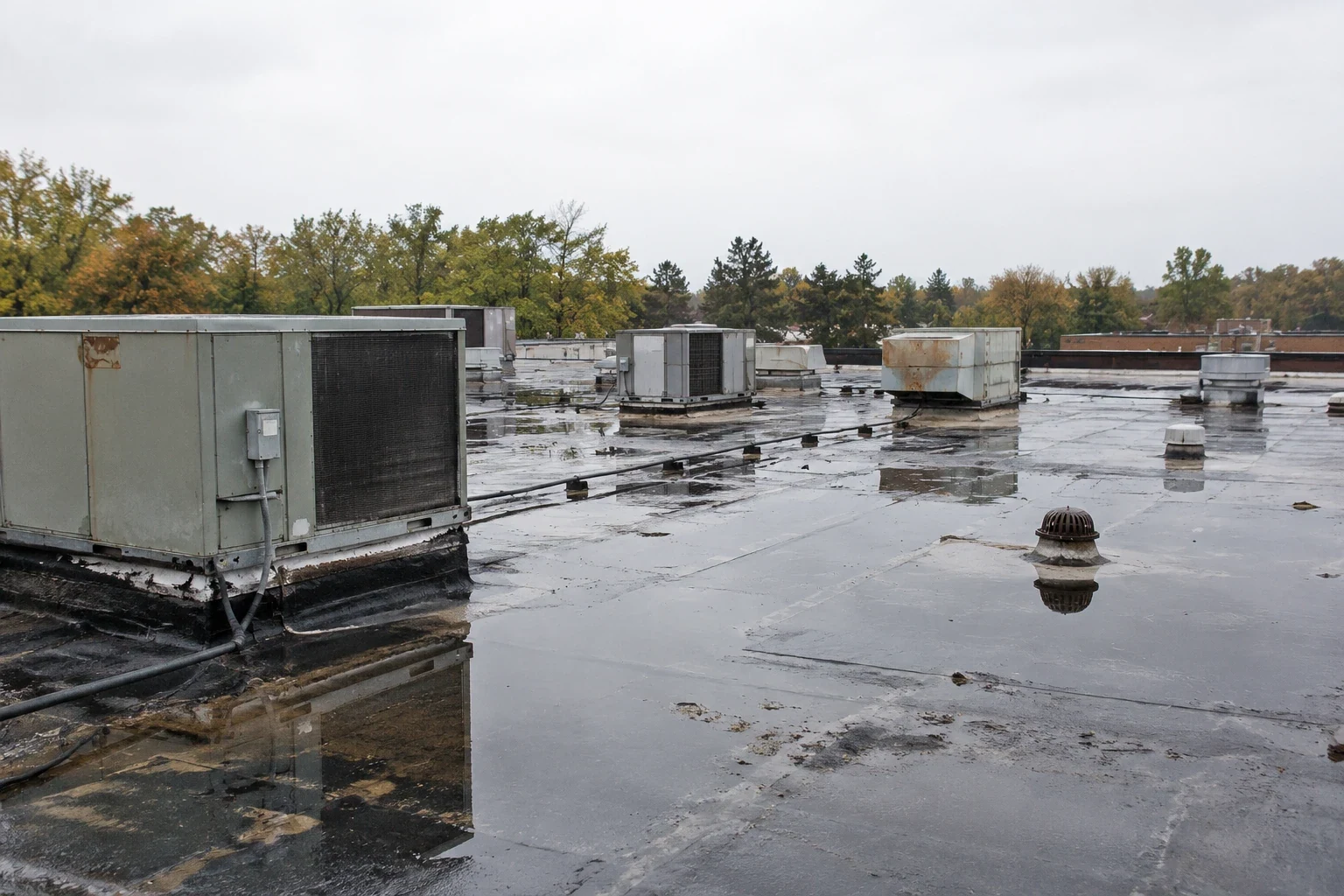
Commercial Ponding Water Roof Repair
Trace the drainage path before authorizing work
A pool that remains after surrounding roof areas dry deserves a drainage and structure review, not just another bead of sealant. In Lakewood, CO, we map the ponded area, drains, scuppers, roof slope, nearby seams and any interior report before recommending repair. The inspection records water depth if it can be measured safely, the time since precipitation reported by the owner, and whether the roof has deflection or softened materials. That evidence helps separate a blocked outlet from a broader slope or assembly concern.
For Lakewood, design references assign 30 psf at ground level and set the roof snow/live-load floor at 30 psf. Snowmelt can collect at restricted drains or low sections; the inspection maps the flow path, while a building professional evaluates structural capacity.
Where should water move across the roof?
We trace the intended path from high points toward drains, scuppers, gutters and discharge points. The field map notes debris, blocked strainers, loose drain rings, damaged sumps, reverse slope, raised patches and transitions that interrupt flow. Water that remains at a low spot may reflect a clogged outlet, local insulation compression, deck deflection or the original geometry. We do not choose a correction until the cause and assembly can be distinguished.
Interior staff can mark ceiling stains, mechanical rooms or areas where water reached stored material. We compare those reports with drains, seams and penetrations above and nearby, since water can travel under a membrane. Photos show the pond boundary and nearby roof features. If snow or standing water prevents a safe inspection, the report marks that section open and identifies the condition needed for a return visit.
A drain and scupper assessment can define the outlet work. Where ponding accompanies a wall or curb leak, a flashing review can check that transition.
How can the roof layer contribute to standing water?
Moisture beneath insulation can reduce support and create low areas, while repeated patching can build a ridge that redirects flow. A soft or visibly deflected area may require a structural or deck review before drainage work. We inspect accessible seams, membrane condition, insulation transitions and the drain bowl, then identify whether the evidence supports a localized repair, moisture testing or a test opening. Concealed conditions remain unconfirmed until a suitable test is completed.
If a drain connection is loose or a membrane termination is open, we identify the correction detail and the tie-in material compatible with the assembly. If the issue is a broad slope deficiency, filling the basin with coating or patch material can add weight without correcting the path. Any tapered insulation or deck adjustment requires design and attachment details suited to the actual building. The written scope separates roofing repairs from design, plumbing or structural work assigned to others.
A roof inspection record can document the flow path. If moisture is suspected below the surface, a moisture survey can guide verification when the scan conditions are suitable.
What repair choices fit the cause?
Cleaning and correcting an outlet may be enough when the drain, strainer or scupper is the verified restriction and the surrounding assembly is sound. A membrane or flashing repair can address an opening that allows water entry near the ponded area. If insulation is wet or the deck has moved, removal and replacement of the affected assembly may be necessary before drainage is restored. We state the work boundary and any access, protection or trade coordination required.
A recover is only considered after the existing roof’s moisture, stability, attachment, drainage and added height are checked. Adding material must not obstruct drains, reduce parapet clearance or cover a movement joint. Replacement can include slope correction or tapered insulation when the design and substrate support it. The proposal identifies quantities based on field measurements and any allowance that depends on opening the assembly.
A membrane puncture repair can address localized damage. If drainage failure affects several roof sections, a replacement comparison can separate the drain correction from membrane renewal.
How do Lakewood properties affect access and timing?
Academy Park includes office and storage redevelopment contexts along South Wadsworth, while Belmar combines government, retail and other mixed uses in the downtown hub. Those settings may involve different roof access permissions, loading zones and occupant routes. We confirm the actual property contact, lift position and delivery window instead of assuming a roof can be reached from a shared lot or service lane. A ponding inspection is planned after the safe access route is confirmed.
Lakewood faces near-term hail, extreme heat and extreme cold hazards. Heat affects worker exposure and may change material handling; cold can restrict wet-applied or adhesive work. Snowmelt and freeze-thaw can change the visible extent of a low area between visits. The report notes the weather and access conditions during observation so a later measurement can be compared on a like basis. At South Wadsworth and Academy Park, we confirm the property’s service route, lift position and delivery window before inspecting drainage.
What confirms that the drainage correction worked?
The closeout identifies the outlet or roof area repaired, photos of the completed detail and any test or observation still required. A follow-up check may confirm that debris is removed, the repaired seam remains closed and the water path is clear after suitable weather. It does not substitute for an engineering evaluation if roof deflection or capacity remains in question. If the ponded area persists, we compare the new observation with the original map and determine whether the unresolved cause needs testing or design input.
For maintained properties, the roof log can list outlets to inspect, patch locations and areas that were inaccessible during the first visit. Staff can record when the observation was made relative to snowmelt or rainfall. That makes a seasonal change visible without treating one image as proof of year-round drainage behavior. The owner receives a clear list of completed work and remaining actions.
Send the roof plan, leak locations, photographs, maintenance notes and access rules. We will trace the drainage path, check nearby details and outline the work supported by the field evidence.
Related Roofing Work
Questions About Commercial Ponding Water Roof Repair
Does standing water always mean the roof needs replacement?
No. We first check the outlet, slope, membrane, insulation and visible deck conditions. The repair recommendation follows the confirmed cause and the extent of affected material.
Can a drain be cleared during the inspection?
If access and site rules allow, debris removal can be included or separately authorized. We document the drain condition and check the surrounding membrane before treating maintenance as a roof repair.
Can ponding be fixed with coating?
A coating does not correct a structural depression or blocked drain by itself. We verify the source of the low area and check that the coating system and substrate fit the proposed work.
What if water is near a sagging roof area?
The area is marked for review, and we avoid treating a capacity concern as a roofing repair. A qualified design professional evaluates the structure using building-specific information.
When should the roof be checked again after drainage work?
The closeout can define a return observation after suitable weather and safe access. We compare the repaired outlet and pond boundary with the original roof map.
Talk with our Lakewood roof team
Send the Lakewood address, roof plan, leak reports, photos, prior drain service and access rules. We will map ponded areas and outlets, identify testing needs and scope a supported correction.